EN
EN

In off-grid PV and storage projects, many people focus on selecting PV modules and energy storage batteries, but overlook a “hidden black hole” that consumes power 24 hours a day — the transformer’s no-load loss. In grid-connected projects, transformers usually operate only during daylight hours, so no-load loss has limited impact. But in off-grid projects, the transformer must stay connected to the bus 24/7, and the “all-day stacking effect” of no-load loss is sharply amplified. This is a cost that every off-grid project developer should carefully calculate.
1. Why Is No-Load Loss More “Deadly” in Off-Grid Systems Than in Grid-Connected Ones?
1.1 The Fundamental Difference in Operating Conditions
Grid-connected PV: The transformer starts and stops with sunlight, operating about 10–12 hours per day. It can be disconnected from the bus at night.
Off-grid PV/storage: The transformer stays connected to the system 24 hours a day, handling voltage transformation and isolation. It cannot be powered down. Excessive losses under light-load and no-load conditions in off-grid systems have become a core bottleneck limiting system economics.
1.2 The “Time Amplifier” Effect of No-Load Loss
The formula for no-load loss is very simple: Annual no-load loss electricity = P₀ (no-load loss in kW) × 8,760 hours.
In grid-connected scenarios, no-load loss accounts for only a small part of total losses. But in off-grid scenarios, load rates fluctuate more widely and no-load time is longer, so no-load loss takes up a significantly larger share of total losses. Industry data shows that transformer no-load loss accounts for about 20%–30% of total rated loss. When transformer capacity is oversized and it runs at low load for long periods, no-load loss can exceed 60% of total loss.
1.3 The “Scarcity of Power Sources” in Off-Grid Scenarios
In off-grid projects, every kilowatt-hour comes from PV panels or diesel generators. The cost per kWh of diesel generation in remote areas can easily exceed 3 RMB, and the comprehensive cost per kWh can climb to 4.1 RMB. In remote overseas mines, diesel generation costs can reach 0.4–1.0 USD/kWh, 4–5 times that of grid electricity. No-load loss consumes “precious power,” not “cheap power,” so its economic cost is further magnified.
2. What Makes Up No-Load Loss — How Does It “Eat” Electricity?
2.1 The Nature of No-Load Loss
No-load loss (iron loss) is mainly determined by the iron core material. It is unrelated to the operating load and occurs as soon as the transformer is energized. It includes hysteresis loss and eddy current loss. You can think of it as the transformer’s “basal metabolism” — just like a phone consumes power even when you are not making a call, a transformer produces no-load loss as long as it is powered on.
2.2 Iron Core Material Is the Decisive Factor
Traditional transformers use ordinary silicon steel sheets, so no-load loss remains high. The iron loss of amorphous alloy transformers is 70%–80% lower than that of traditional transformers using silicon steel cores. Compared with the latest generation of Grade 1 silicon steel dry-type transformers, the newest ultra-high-efficiency amorphous alloy transformers reduce no-load loss by 65.2%.
2.3 Special Challenges in Off-Grid Scenarios
Off-grid systems often face frequent high-low load cycles, which places higher demands on transformer magnetic circuit stability. No-load loss continues to consume power during light-load and no-load periods, and these are exactly the times when energy storage in off-grid systems is most “stressed.” In extreme scenarios, no-load loss in off-grid systems may force an increase in PV and storage capacity to compensate for the supply capacity “eaten” by losses.
3. An Economic Calculation You Cannot Ignore
3.1 Annual Power Consumption Calculation Model
Take a 1,000 kVA transformer as an example. The no-load loss varies significantly by energy efficiency grade:
Efficiency Grade |
Model Example |
No-Load Loss (kW) |
Annual No-Load (kWh) |
Diesel Cost (3 RMB/kWh) |
Grade 3 |
SCB10 |
≈1.8 |
15,768 |
≈47,304 RMB |
Grade 2 |
SCB11 |
≈1.4 |
12,264 |
≈36,792 RMB |
Grade 1 |
SCB13 |
≤1.2 |
10,512 |
≈31,536 RMB |
Note: Annual no-load power = no-load loss × 8,760 hours. Actual data varies by product model and load rate.
Upgrading from Grade 3 to Grade 1 can save about 15,000 RMB per year in diesel backup costs from no-load loss alone.
3.2 Life Cycle Cost (LCOE) Perspective
Although Grade 1 transformers have a higher initial cost, their no-load loss is 30%–50% lower, which can save a large amount of electricity cost over a 25-year operating period. For example, comparing SCB14 (Grade 1) with SCB11 (Grade 2), annual electricity savings can reach 20,000 kWh. The initial investment for a Grade 1 box-type substation is higher, but in off-grid scenarios, the electricity cost savings far exceed the purchase price difference.
3.3 The “Amplification Factor” in Off-Grid Scenarios
Electricity prices (or diesel backup costs) in off-grid projects are much higher than grid-connected electricity prices. At a diesel backup cost of 3 RMB/kWh, a 1,000 kVA Grade 1 transformer can save about 75,000 RMB in no-load loss electricity costs over 5 years compared with a Grade 3 transformer. After considering transformer and cable losses, off-grid system energy output can be reduced by 2.3%–4.6%. These losses ultimately require additional PV or diesel capacity to compensate.
4. Jiangsu Unita’s Off-Grid No-Load Loss Optimization Solutions
4.1 Iron Core Material Upgrade
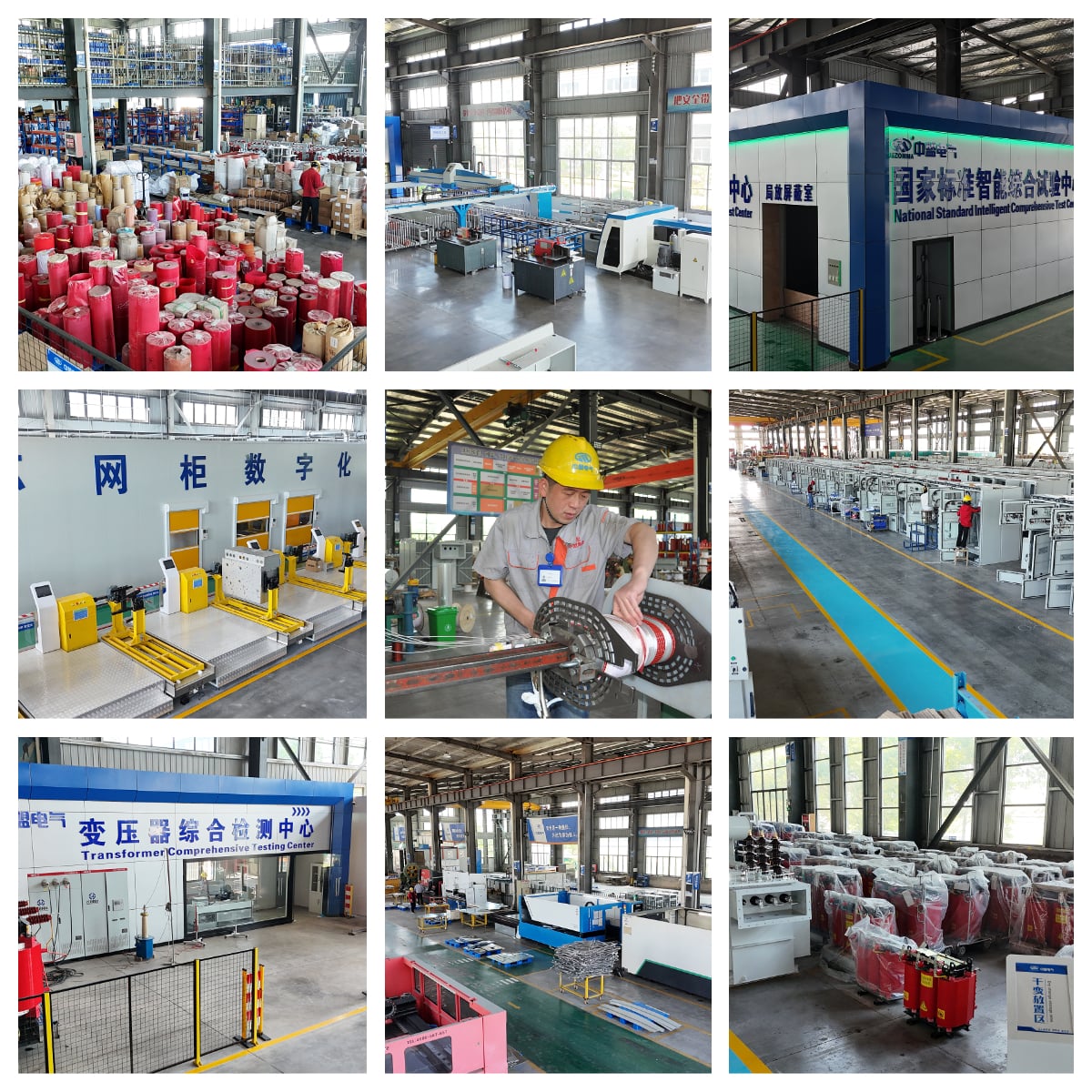
Jiangsu Unita Electric’s PV-specific box-type substations adhere to full copper windings and Grade 1 energy efficiency standards. The SCB13/S20 series reduces no-load loss by more than 25% compared with the national standard, and a 2,500 kVA model saves more than 30,000 kWh per year. For large-capacity box-type substations, amorphous alloy iron cores are optional, reducing no-load loss by another 50%. The S20 series uses high-permeability cold-rolled silicon steel cores and high-purity oxygen-free copper windings, reducing no-load loss by 15%–20% compared with S13, with efficiency exceeding 99% in common load ranges.
4.2 Winding Process Optimization
Jiangsu Unita Electric insists on full copper winding design. Load loss is 25%–30% lower than aluminum windings, heat dissipation is better, and service life is longer. The SCB13 series uses oxygen-free copper + polyimide film windings, with a temperature resistance of 220°C, enduring 10 more years of high-temperature shock than ordinary conductors. In production, the “single-piece 5 or 7-step lap” method is used to improve grain structure, effectively reducing hysteresis loss. No-load loss is reduced by 30%, and load loss is reduced by more than 10%.
4.3 Scenario-Based Customization and Extreme Environment Adaptation
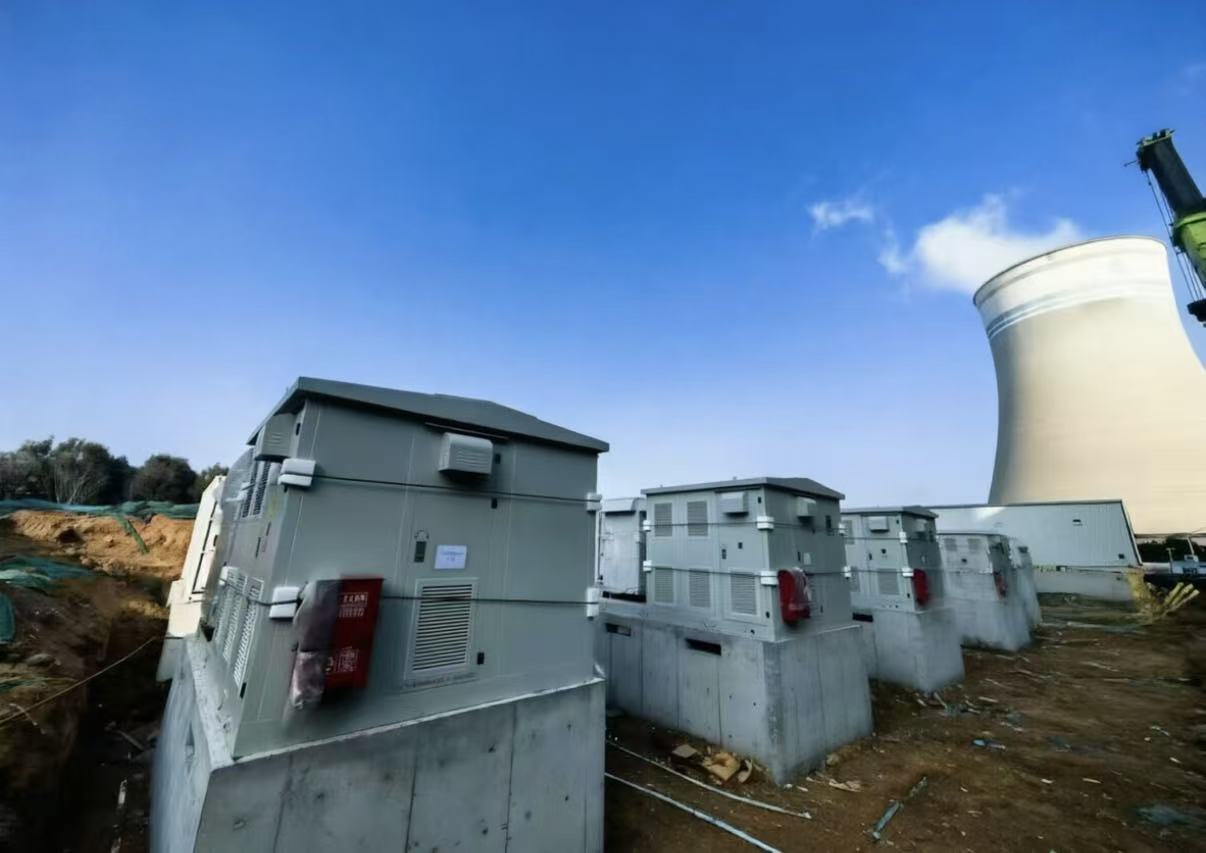
Off-grid projects are often deployed in remote areas with harsh environmental conditions. Zhongmeng Electric customizes IP54/IP65 protection and C5-M corrosion protection solutions for complex conditions such as mountains, coastal salt spray, and desert sandstorms, ensuring stable operation from -40°C to +55°C. For high-altitude scenarios, Zhongmeng customizes reinforced insulation + double-layer anti-condensation structure + smart temperature control system. A 200MW high-altitude PV project in Qinghai at over 3,800 meters has had zero equipment failures in two years of operation.
4.4 Field-Proven Data
A Jiangsu Unita box-type substation commissioned in 2013 at a Northwest China power station still has iron core loss stable at 95% of its initial value, while other brands at the same site have replaced their iron cores twice. At a plateau power station at 4,500 meters in Tibet, Jiangsu Unita equipment has operated for 8 years with zero failures, while a neighboring station’s brand replaced its box body three times due to low-temperature cracking. These cases confirm Zhongmeng equipment’s long-term reliability in extreme environments.
5. Key Points for Off-Grid PV Step-Up Transformer Selection
5.1 Energy Efficiency Grade First
Give priority to Grade 1 or Grade 2 energy efficiency products that comply with GB 20052-2024. No-load loss can be reduced by 30%–50%. Verify with both “energy efficiency labels + measured data” to avoid “fake high-efficiency” products with false ratings.
5.2 Capacity Matching — Avoid “A Big Horse Pulling a Small Cart”
Oversized capacity leads to long-term low-load operation, and the no-load loss share surges. Undersized capacity leads to overload operation at peak load, and fault repair costs are 3–5 times the initial equipment savings. The industry-standard practice is to configure box-type substation capacity at 1.1–1.3 times the PV installed capacity. This reserves space for module degradation while avoiding no-load loss spikes caused by light loads. For example, a 10MW PV project can use 11–13 MVA box-type substation capacity.
5.3 Iron Core Material Selection Decision Tree
Iron Core Material |
No-Load Loss Reduction |
Applicable Scenario |
Ordinary silicon steel |
Baseline |
Extremely budget-sensitive, high load rate scenarios |
High-permeability silicon steel |
20%–25% lower |
Best value, conventional off-grid projects |
Amorphous alloy |
60%–80% lower |
Optimal solution for 24-hour off-grid scenarios |
5.4 Scenario-Based Selection Recommendations
Remote communication base stations: Focus on no-load loss and protection rating. Off-grid base stations generally face high electricity costs, and no-load loss optimization directly affects operating economics.
Off-grid microgrids: Need to support bidirectional conversion and storage interfaces. It is recommended to include transformer no-load loss in the storage capacity calculation at the system design stage, to avoid insufficient storage capacity due to losses.
High altitude/extreme climate: Focus on temperature adaptability and corrosion protection grade. Zhongmeng equipment can operate stably from -40°C to +55°C, with optional IP54/IP65 protection ratings.
Conclusion
In off-grid systems, transformer no-load loss is not “small change” — it is a fixed expense that runs 24 hours a day. Take a 1,000 kVA transformer as an example. In an off-grid scenario with a diesel backup cost of 3 RMB/kWh, a Grade 1 transformer compared with a Grade 3 transformer can save more than 75,000 RMB in no-load loss alone over 5 years — enough to cover the purchase price difference of the Grade 1 product and then some.
Off-grid project developers should include no-load loss in life cycle cost evaluation at the selection stage, rather than only looking at the purchase price. For off-grid projects already in operation, it is also worth evaluating the economics of transformer replacement — especially in scenarios with high diesel backup costs, where the payback period for replacing with low-loss transformers may be shorter than expected.