EN
EN

In an off-grid power system, choosing between a grid-forming and a grid-following inverter is not a matter of a few percentage points in efficiency. It is the difference between a system that establishes voltage and one that cannot start at all. The distinction comes down to a single control principle: current source versus voltage source.
Current Source vs. Voltage Source
A grid-following inverter behaves as a controlled current source. It uses a phase-locked loop to measure the phase of an existing AC voltage and injects current in synchronism with that reference. It depends entirely on an external voltage and frequency reference to function. In an off-grid environment, where no such reference exists, a grid-following inverter has nothing to follow.
A grid-forming inverter, by contrast, operates as a voltage source. It establishes its own internal voltage phasor with a locally set magnitude and frequency, and other sources and loads synchronize to that reference. In this sense, its behavior resembles that of a synchronous generator: it does not wait for a grid to exist; it creates the conditions for one.
Why Off-Grid Systems Require Grid-Forming Control
In a microgrid or islanded system, there is no utility grid to provide the voltage and frequency baseline. If the power conversion system (PCS) operates in grid-following mode, no device in the system takes responsibility for establishing that baseline. The microgrid cannot energize. This is not a marginal performance limitation; it is a functional precondition.
The same principle applies when high-power motor loads are connected. Induction motors draw a high inrush current at start-up, and that current can interfere with inverter control loops in an islanded microgrid. A grid-forming inverter must allow a momentary voltage drop within IEEE Std. 1547 ride-through limits while maintaining voltage regulation and avoiding a trip.
Grid-following inverters do not possess this capability in an off-grid context, because they are not the devices establishing the voltage in the first place. In microgrids, islanded industrial sites, and remote mining or processing operations, grid-forming capability is therefore a baseline requirement, not an optional upgrade.
What to Look For in a Grid-Forming PCS
The essential capabilities include black start (establishing voltage from a de-energized state), inertia response on a millisecond timescale, short-circuit current contribution to ride through motor-starting transients, and smooth transition between grid-connected and islanded modes.
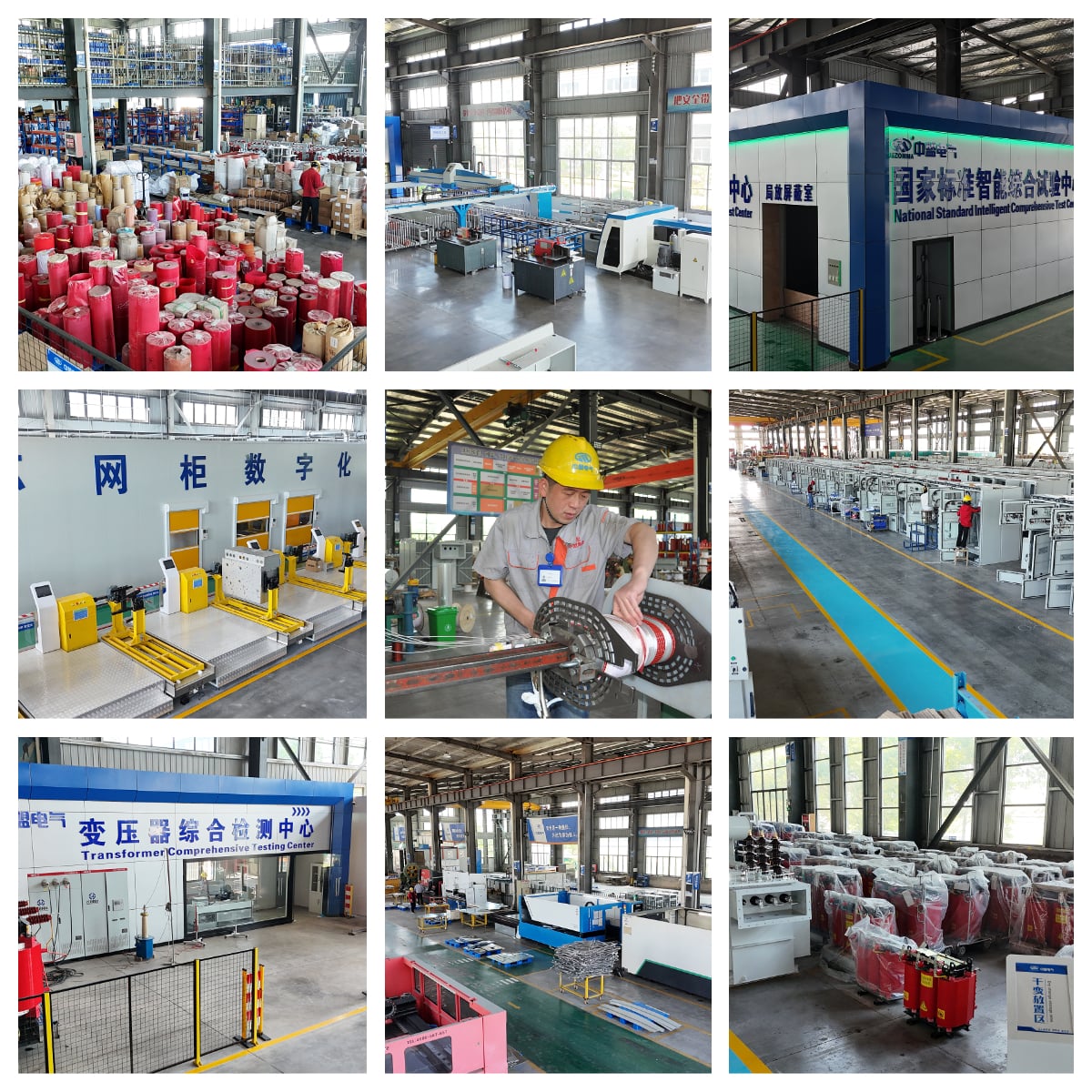
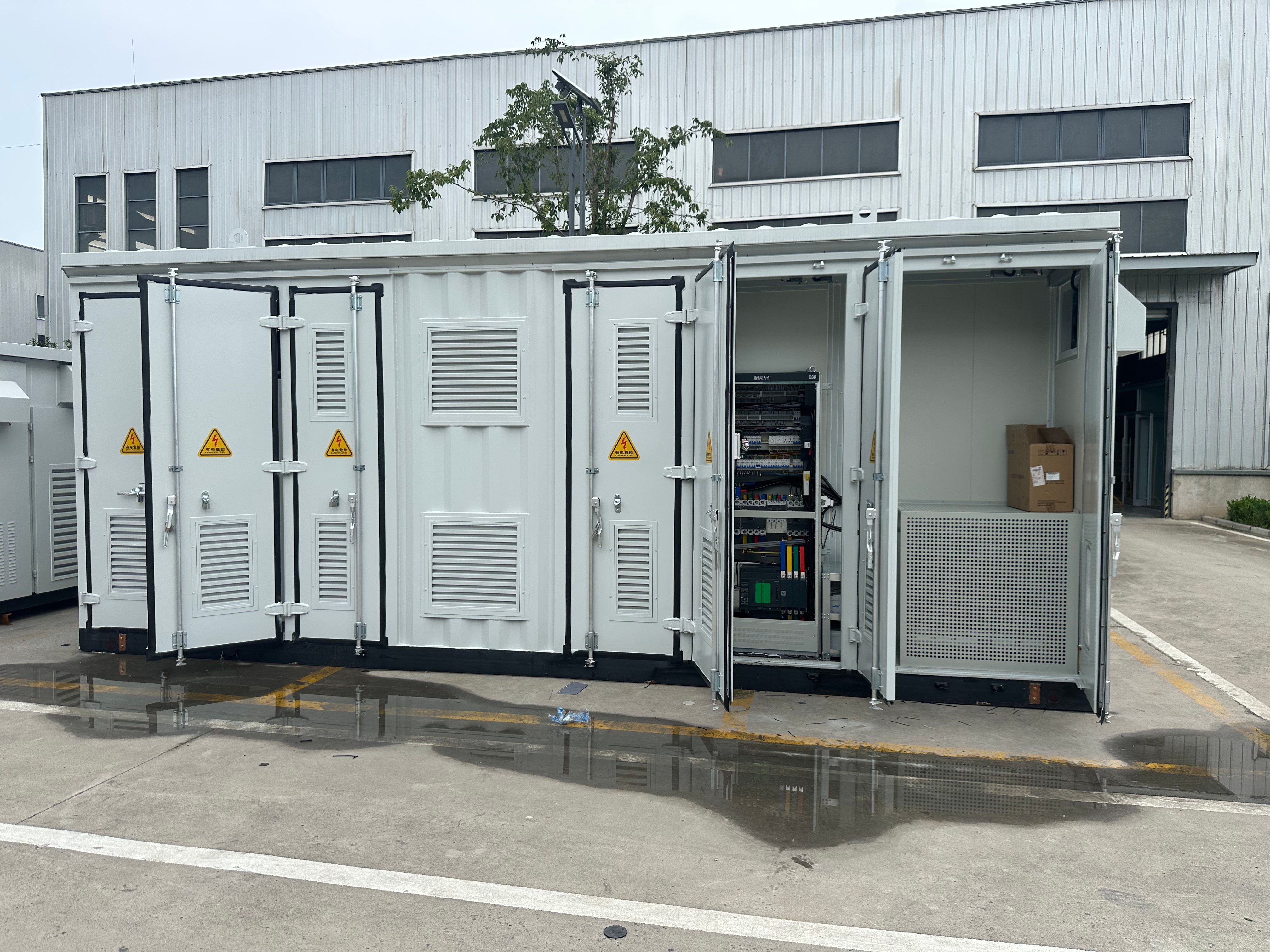
A practical example is a grid-forming PCS integrated with a step-up transformer, such as those offered by Zhongmeng (Jiangsu Zhongmeng Electrical). Its grid-forming PCS boost integrated unit specifies a response time of 10 ms or less and stable operation at a short-circuit ratio (SCR) below 1.1, a range that conventional grid-following equipment typically cannot support.
The unit also incorporates inertia response, damping control, multi-unit parallel operation, black start, and phase-angle jump tolerance, with conversion efficiency at or above 98.5%. These specifications are relevant not as marketing figures, but because they correspond directly to the off-grid conditions described above.
A Short Selection Checklist
Before specifying a PCS for an off-grid project, four questions are worth asking.
1. Does the project actually involve islanded operation? If so, grid-forming control is a precondition.
2. Can the PCS perform a black start and establish voltage on an empty bus?
3. What is the inertia response time, and is it specified in milliseconds rather than seconds?
4. Can the unit ride through the inrush current of motor loads without tripping?
If any of these answers is unclear, the control mode has not been adequately verified.
Application Scenarios
Scenario |
Grid Mode |
Power Range |
Key Requirement |
Microgrid |
Islanded |
100 kW - 10 MW |
Black start, inertia response |
Remote Mining |
Off-grid |
1 - 50 MW |
Motor starting, SCR < 1.1 |
Industrial Site |
Hybrid |
500 kW - 20 MW |
Seamless mode transition |
A grid-forming inverter is not a "better" grid-following inverter. It is a different category of device, suited to a different grid condition. In off-grid systems, selecting the correct control architecture matters more than comparing power ratings.
FAQ
Q: What is the main difference between grid-forming and grid-following inverters?
A: Grid-forming acts as a voltage source that creates its own reference; grid-following acts as a current source that needs an existing voltage to follow.
Q: Can a grid-following inverter work in an off-grid system?
A: No. Without an external voltage reference, a grid-following inverter has no signal to synchronize with and cannot start.
Q: What is black start capability?
A: The ability to energize a de-energized bus and establish voltage without any external power source.
Q: Why is response time important for off-grid PCS?
A: Fast response (10 ms or less) ensures voltage stability during sudden load changes and motor starting in islanded systems.
Q: What does SCR below 1.1 mean for a PCS?
A: It indicates the PCS can maintain stable operation in weak grid conditions where the short-circuit ratio is very low.