EN
EN
01 Introduction
When selecting equipment for off-grid energy storage projects, the protection rating is often one of the first parameters to be decided—and one of the easiest to oversimplify. Some people automatically choose IP65, thinking a higher number is always safer. Others fill in IP54 based on past project experience, only to find on site that wind-blown sand or salt spray is far more severe than expected.
The root of the problem is not whether IP54 or IP65 is better. It is whether you have first confirmed the environmental type of the project location. The first threshold for any protection rating is determined by geography.
02 What’s the Real Difference Between IP54 and IP65?
Understanding the IP Rating System
IP protection ratings are defined by IEC 60529 and GB/T 4208-2017. The two digits represent dust and water protection.
IP54 has a dust protection level of 5, meaning “dust protected”—a small amount of dust may enter, but it does not affect normal operation. Its water protection level is 4, meaning it can resist splashing water from all directions. IP65 has a dust protection level of 6, meaning “dust-tight”—dust cannot enter under negative pressure testing. Its water protection level is 5, meaning it can resist low-pressure water jets from all directions.
The Heat Dissipation Trade-off
On paper, IP65 is one level higher than IP54. But that one-level increase comes with a hard constraint: the better the seal, the harder it is to dissipate heat. An IP65 enclosure is tightly sealed. Heat generated by transformers, busbars, and switching devices inside cannot escape easily, and internal temperatures can exceed 60°C. For continuously operating off-grid energy storage systems, heat dissipation directly affects equipment life and availability.
This means the choice between IP54 and IP65 is not a question of “higher is better.” It is a question of which level provides the best balance between sealing and heat dissipation for a specific environment.
03 Windy, Sandy Areas: Why IP54 Is Enough
What the Standards Say
GB/T 51368-2019, Technical Standard for Building Photovoltaic Systems, Clause 8.6.2, is clear: for outdoor equipment, windy and sandy areas should reach IP54, while coastal areas should reach IP65. The fact that the same standard sets different requirements for different environments shows that the selection logic is scenario-driven.
Damage Mechanism in Wind-Sand Environments
The damage mechanism in wind-sand environments is completely different from that of coastal salt spray. The main threat from sand particles is physical intrusion—fine sand entering high-voltage and low-voltage compartments can cause insulation degradation, contact contamination, and blocked cooling channels. IP54’s level 5 dust protection is enough to intercept most sand particles. Combined with removable, washable dust filters, sand intrusion can be kept within a safe range.
Why IP54 Often Outperforms IP65 in Dry Climates
More importantly, windy and sandy areas are usually dry, so water protection needs are far less urgent than in coastal areas. IP54’s splash resistance is enough for occasional rain. A fully sealed IP65 design, on the other hand, creates a negative effect in dry, dusty environments: heat builds up inside the enclosure and accelerates component aging. Seals also tend to harden and fail more easily in dry, high-temperature environments.
Therefore, choosing IP54 in wind-sand areas is essentially trading moderate dust protection plus an effective filter maintenance plan for better heat dissipation and lower overall cost. This is far more reasonable than blindly choosing IP65 and then struggling with heat problems.
Case Study: Golmud High-Altitude Hydrogen Base
This selection logic was verified in the Dongfang Electric Golmud High-Altitude Hydrogen Innovation Base project. The project is the Qaidam Gobi Off-Grid Wind-Solar-Storage-Hydrogen Demonstration Project. The site is at high altitude, with strong winds and blowing sand year-round, large day-night temperature swings, and thin air. These conditions put extra pressure on equipment heat dissipation.
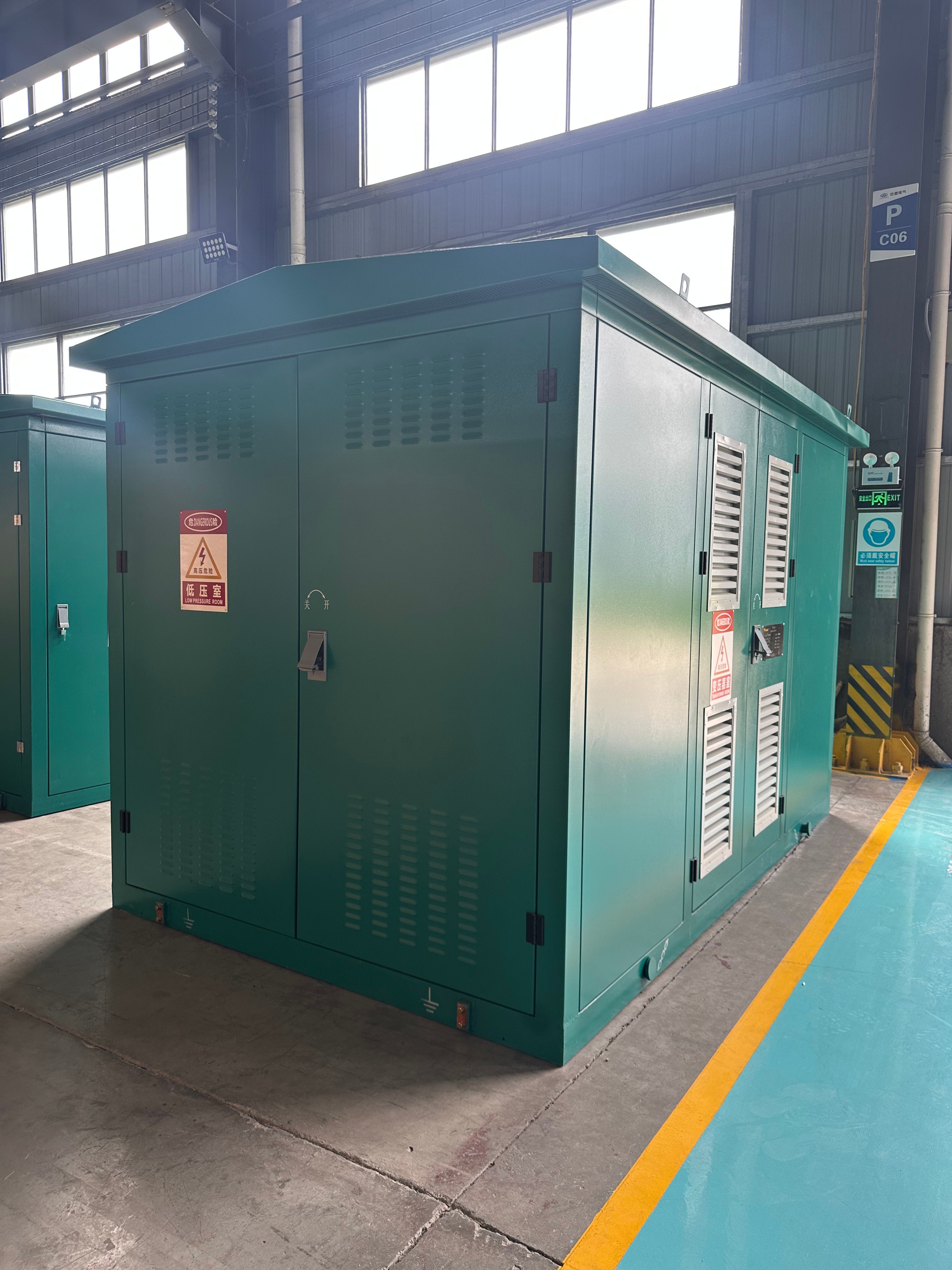
Jiangsu Unita Electric supplied off-grid box transformers for the project. Instead of blindly choosing IP65 high-sealing protection, the company selected IP54 based on the dry, low-rainfall Gobi conditions. This solution effectively blocks wind-blown sand from entering the cabin while keeping proper ventilation channels. It greatly improves heat dissipation at high altitude and avoids the internal high temperatures and condensation risks common in fully sealed designs, achieving a balance between protection and cooling.
04 Coastal Areas: IP65 Is the Baseline
Salt Spray Damage Mechanism
The damage logic in coastal environments is completely different. Salt spray exists as chloride aerosols that penetrate with the wind. Once chloride ions contact metal surfaces, they trigger continuous electrochemical corrosion. Copper busbar oxidation, white powder on terminals, and soaring contact resistance are the most common failure modes in coastal off-grid projects.
Building an Effective Coastal Protection System
The core value of IP65’s level 6 dust protection and level 5 water jet protection in coastal scenarios is blocking the physical intrusion path of salt spray aerosols. Only when combined with a stainless steel enclosure (such as 304 stainless steel) and anti-corrosion verification with a salt spray test of at least 500 hours can an effective protection system be formed. If the enclosure is just ordinary steel with powder coating, even if it is labeled IP65, the coating will usually rust and blister within 1 to 2 years in a salt spray environment, and the protection rating becomes meaningless.
Important Considerations for Low-Lying Sites
Special attention should be paid to the fact that IP65 protects against water jets, not immersion. For low-lying, flood-prone coastal sites, the box transformer foundation needs to be raised by more than 300 mm, with drainage design included. IP65 solves the problem of salt spray and rain spray. Immersion risk must be handled by site engineering.
05 Jiangsu Unita’s “One Site, One Plan”
Environment-Adaptation Framework
In its custom practice for off-grid energy storage PCS booster and converter integrated cabins, Jiangsu Unita Electric has incorporated protection rating configuration into a “one site, one plan” environment-adaptation framework. For desert and wind-sand scenarios, Jiangsu Unita’s optimization direction is an enhanced sealed filter design, maintaining IP54-level dust protection while keeping effective heat dissipation channels. For coastal salt spray scenarios, the company upgrades the anti-corrosion coating system and uses a sealed heat dissipation design to cut off the salt spray intrusion path, raising the protection rating to IP65 or above.
System-Level Configuration
The value of this custom logic is that it does not treat the IP rating as an isolated number. Instead, it configures it as a system together with heat dissipation solutions, anti-corrosion coatings, filter maintenance, and enclosure material. Equipment in wind-sand areas and coastal areas may look similar on the outside, but the internal heat dissipation channel design, sealed filter specifications, and surface treatment processes are completely different solutions.
The Golmud project further shows that even within the same wind-sand environment, conditions such as high altitude, thin air, and large day-night temperature differences place higher demands on heat dissipation. The protection rating must be chosen based on the full set of site conditions, not by applying a generic template.
06 Before You Choose: Where Is the Project?
Selecting a protection rating for an off-grid energy storage project is essentially a geography question.
For windy, sandy projects in the northwest Gobi or desert edges, prioritize IP54 with an enhanced filter solution. Heat dissipation comes first, and dust protection is sufficient. For coastal, island, and high-salt-spray projects, IP65 is the baseline. At the same time, a stainless steel enclosure or C5-M anti-corrosion coating is a must. Otherwise, even IP65 seals cannot withstand salt spray attacking the enclosure itself.
If a project spans multiple environmental types—for example, the same batch of equipment is to be deployed in both wind-sand and coastal areas—then “one site, one plan” custom capability is not a bonus. It is a basic requirement. First confirm the environment, then set the rating, and finally match the heat dissipation and anti-corrosion solutions. This order cannot be reversed.
07 IP Rating Quick Comparison
Protection Level |
Dust Rating |
Water Rating |
Heat Dissipation |
Best Environment |
IP54 |
Level 5: Dust protected |
Level 4: Splash |
Good (vented) |
Dry, windy, sandy |
IP65 |
Level 6: Dust-tight |
Level 5: Water jet |
Poor (sealed) |
Coastal, high salt |
IP54+Filter |
Level 5 + filter |
Level 4: Splash |
Excellent |
Gobi, desert, arid |
IP65+C5-M |
Level 6: Dust-tight |
Level 5: Water jet |
Managed |
Tropical coast |
Table: Comparison of IP protection ratings for off-grid energy storage applications
08 Frequently Asked Questions
Q: Is IP65 always better than IP54 for off-grid projects?
No. IP65 provides better sealing but significantly reduces heat dissipation capability. In dry, windy, sandy environments, IP54 with enhanced filters often provides better overall performance because it maintains proper ventilation while offering sufficient dust protection. The key is matching the rating to the specific environment, not choosing the highest number.
Q: What if my project spans both wind-sand and coastal areas?
Equipment deployed across multiple environment types requires a “one site, one plan” approach. Each deployment location should be assessed individually. Wind-sand sites need IP54 with filter solutions; coastal sites need IP65 with stainless steel enclosures and C5-M anti-corrosion coatings. Using a single uniform specification across both environments will compromise performance in at least one of them.
Q: Does the IP rating alone protect against salt spray corrosion?
No. IP65 blocks salt spray aerosol intrusion into the enclosure, but it does not protect the enclosure itself from corrosion. You must combine IP65 sealing with a stainless steel enclosure (e.g., 304 SS) or C5-M anti-corrosion coating, verified by a salt spray test of at least 500 hours. Without this, even an IP65 enclosure will rust within 1–2 years in coastal service.
Q: How should I maintain IP54 equipment in dusty conditions?
IP54 equipment in dusty environments should use removable, washable dust filters at all ventilation openings. Establish a regular filter cleaning schedule based on local dust conditions—typically every 1–3 months. Monitor internal temperatures periodically to detect any airflow blockage early. This maintenance approach keeps sand intrusion within safe limits while preserving the heat dissipation advantages of IP54.