 EN
EN

Introduction
Selecting the right transformer is one of the most critical decisions in wind power project development. The choice between a dry-type transformer and an oil-filled transformer for wind turbine applications directly impacts safety, reliability, cost, and long-term operational performance. As wind farms grow larger—both onshore and offshore—with turbine capacities reaching 10MW and beyond, the transformer selection process has become increasingly complex. This guide compares dry-type vs oil-filled transformers for wind energy applications, examining technical specifications, regulatory requirements, installation constraints, and environmental considerations to help you make an informed decision for your wind power project.
Why Transformer Selection Matters in Wind Power
Wind turbine generators typically produce electricity at 690V, which must be stepped up to medium voltage (typically 35kV or higher) for efficient transmission over long distances. This is the transformer's role—and its performance directly affects system efficiency, with losses typically below 1% for both dry and oil-immersed designs.
The transformer must withstand extreme operating conditions unique to wind power:
• Vibration and mechanical stress from rotating turbine components
• Wide temperature variations from -40°C to +50°C in onshore locations
• Salt spray, humidity, and corrosion in offshore environments
• Frequent load fluctuations due to variable wind speeds
Choosing the wrong type can lead to premature failure, costly downtime, or even fire hazards. Standards like IEC 60076-16 specifically address transformers for wind turbine applications, covering ratings from 100 kVA to 10,000 kVA with voltages up to 36kV.
Dry-Type Transformers for Wind Power
What Are Dry-Type Transformers?
Dry-type transformers use air as the cooling medium and resin or cast-coil insulation instead of liquid. In wind applications, they are typically resin-impregnated (cast resin) designs with F-class insulation rated for 155°C continuous operation.
Key Advantages for Wind Projects
1. Fire Safety
Dry-type transformers contain no combustible oil, significantly reducing fire risk. This is the primary reason many regulations mandate their use in enclosed spaces—the National Energy Administration's Twenty-Five Key Requirements for Preventing Power Production Accidents (2023) explicitly requires dry-type transformers for installations inside wind turbine nacelles or towers.
2. Environmental Friendliness
No risk of oil leaks contaminating soil or water—particularly critical for offshore wind farms and environmentally sensitive onshore locations.
3. Reduced Weight
Dry-type transformers are generally lighter than oil-filled units of equivalent capacity, easing nacelle installation and reducing structural loading on the tower.
4. Lower Maintenance
With no oil to monitor, test, or replace, dry-type transformers offer simpler long-term maintenance.
Challenges and Limitations
Higher Cost
Dry-type units typically have a higher initial purchase price than oil-filled alternatives of the same rating.
Thermal Limitations
While F-class insulation allows 155°C operation, the absence of liquid cooling limits heat dissipation capacity under sustained overloads. This can be a concern for wind turbines that frequently operate at full capacity for extended periods.
Vulnerability to Partial Discharge
In resin-insulated transformers, partial discharges can accumulate within voids and progressively deteriorate insulation. Liquid-based systems, by contrast, can "self-heal" as fresh liquid migrates to fault areas.
Oil-Filled Transformers for Wind Power
What Are Oil-Filled Transformers?
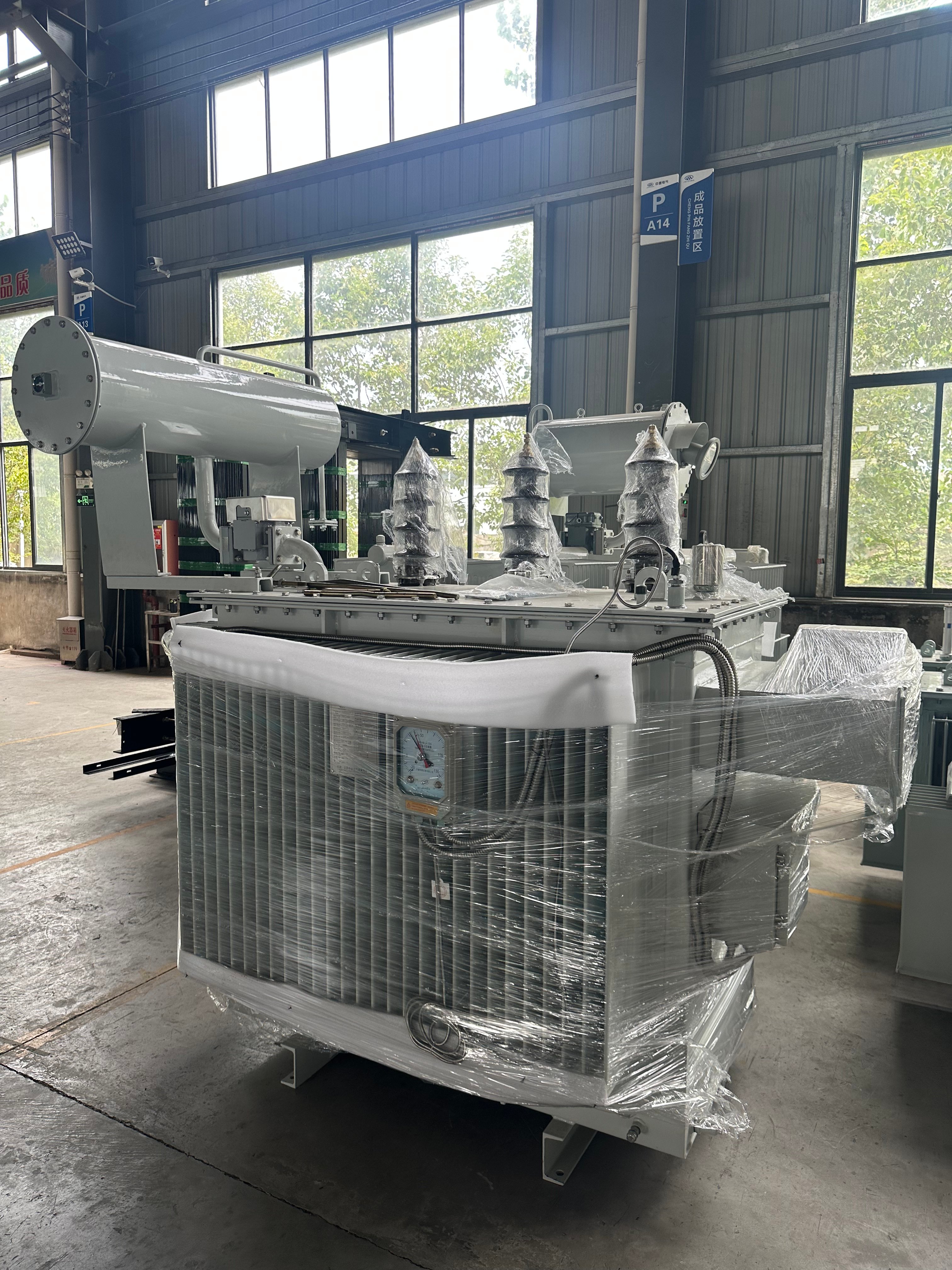
Oil-filled transformers (also called liquid-immersed transformers) use mineral oil or synthetic/vegetable esters for both insulation and cooling. In wind applications, they typically use A-class insulation rated for 105°C continuous operation.
Key Advantages for Wind Projects
1. Superior Cooling Capacity
Oil provides excellent heat transfer, allowing higher power density and better overload handling. Forced oil circulation systems can further enhance capacity.
2. Lower Initial Cost
Oil-filled transformers generally cost less than dry-type units for equivalent ratings, offering a clear economic advantage for projects with flexible installation requirements.
3. Self-Healing Insulation
Liquid insulation systems can automatically send fresh dielectric fluid to fault areas to replace degraded material—a feature not available in dry-type designs.
4. Better Moisture Resistance
Oil-immersed systems are less susceptible to moisture ingress than dry-type insulation, making them more suitable for humid environments.
5. Biodegradable Ester Options
Modern ester-based fluids (e.g., synthetic esters like MIDEL® 7131) are classified as "readily biodegradable" and non-water-hazardous, with fire points exceeding 300°C (Class K)—addressing environmental and fire safety concerns.
Challenges and Limitations
Fire Risk and Regulations
Traditional mineral oil is flammable, and even ester fluids, while safer, still represent a combustible inventory. In China, current regulations mandate dry-type transformers for nacelle or tower installations onshore. Only offshore projects may use oil-filled units, and only with K-class insulating liquids.
Weight and Size
Oil-filled transformers are heavier than dry-type equivalents, which can be a critical constraint for nacelle-mounted installations where weight limits are tight.
Oil Monitoring and Maintenance
Regular oil sampling and dissolved gas analysis (DGA) are required to detect degradation or incipient faults, adding to operational costs.
Leakage Risk
While modern designs are highly reliable, seal failures can lead to oil leaks, potentially causing environmental damage and costly cleanup.
Comparison: Dry-Type vs Oil-Filled Transformers for Wind
Aspect |
Dry-Type Transformer |
Oil-Filled Transformer |
Insulation class |
F (155°C) |
A (105°C) |
Typical losses |
<0.1% (no-load), <1% (load) |
<0.1% (no-load), <1% (load) |
Relative cost |
Higher |
Lower |
Weight |
Lighter |
Heavier |
Cooling |
Air (natural or forced) |
Oil (natural or forced) |
Fire risk |
Very low |
Moderate to low (esters) |
Environmental risk |
Minimal |
Oil leak potential |
Onshore nacelle/tower |
Required by regulation |
Not permitted (onshore) |
Offshore installations |
Permitted |
Permitted (K-class fluid required) |
Tower base (external) |
Permitted |
Permitted |
Maintenance |
Lower |
Higher (oil testing) |
Overload tolerance |
Limited by air cooling |
Superior (liquid cooling) |
Vibration tolerance |
Good |
Good |
Humidity resistance |
Moderate |
Excellent |
Regulatory Requirements: A Critical Deciding Factor
Onshore Wind Farms
The Twenty-Five Key Requirements for Preventing Power Production Accidents (2023), issued by China's National Energy Administration, explicitly states:
"Transformers installed inside wind turbines (including tower and nacelle) shall use dry-type transformers, be placed in independent isolation rooms with automatic fire extinguishing devices, and have fire-rated partitions with a fire resistance rating of no less than 1 hour."
For tower-external transformers:
• If distance to tower < 10m, dry-type transformer is required
• If distance ≥ 10m, oil-filled transformers are permitted
• For transformers attached to tower exterior, dry-type is mandatory with automatic fire suppression
Offshore Wind Farms
Offshore installations have more flexibility due to different risk profiles. The same regulation clarifies:
"Offshore wind turbines may use dry-type or oil-immersed transformers for nacelle installation, provided oil-immersed units use Class K insulating liquids (per GB/T 27750-2011) or higher-grade oils or esters."
This exception recognizes the superior cooling capacity and reliability of liquid-immersed systems in harsh marine environments, provided fire-safe fluids are used.
Installation Location: Nacelle, Tower, or Ground?
The transformer's physical location within the wind project is a major factor in technology selection.
Nacelle-Mounted Transformers
With wind turbines growing to 10MW+, nacelle-mounted transformers have become a leading technical route. Key considerations include:
• Weight constraints: Every kilogram in the nacelle requires a stronger (more expensive) tower and foundation. Dry-type units are lighter.
• Space constraints: Compact designs are essential. Both types are available but require careful engineering.
• Vibration: Nacelle transformers must withstand continuous vibration and dynamic loading from rotating components.
• Regulatory: Onshore nacelle installations must use dry-type per regulation.
Tower Base (Internal)
Transformers installed at the tower base avoid weight constraints but face space limitations and ventilation challenges. Both dry and oil-filled units are options, with cooling design being a critical consideration.
External Ground Installation
External transformers face fewer restrictions but require appropriate fire separation distances. Oil-filled units are commonly used in this configuration for cost reasons, provided spacing requirements are met.
Special Considerations: Offshore Wind Power
Offshore wind farms present unique challenges that influence transformer selection.
Harsh Marine Environment
Salt spray, 100% humidity, and corrosive conditions demand robust designs. Both dry-type and liquid-filled transformers are available with appropriate corrosion protection.
Biodegradable Fluids
For oil-filled offshore transformers, ester-based fluids (synthetic or natural esters) are strongly preferred due to environmental regulations and fire safety. Synthetic esters like MIDEL® 7131 are classified as "readily biodegradable" and non-water-hazardous, with proven performance up to 135MVA and 238kV.
Fire Risk in Enclosed Spaces
Offshore turbine nacelles are confined spaces with limited escape routes. While regulations permit oil-filled units with K-class fluids, fire behavior remains a critical safety consideration.
Solid-State Transformer (SST) Emerging Technology
Research is exploring solid-state transformers as alternatives to conventional low-frequency transformers for offshore applications, offering potential weight, size, and cost advantages.
How to Choose: Decision Framework
Follow this step-by-step approach to select the right transformer for your wind power project:
Step 1: Identify Installation Location
• Nacelle or tower interior (onshore): Dry-type is mandatory by regulation.
• Nacelle or tower interior (offshore): Both types permitted; consider cooling needs vs weight constraints.
• Tower exterior (attached): Dry-type required by regulation.
• Ground-mounted (distance ≥ 10m): Both types permitted.
Step 2: Assess Environmental Conditions
• High humidity or coastal: Oil-filled with ester fluids offer superior moisture resistance.
• Fire-sensitive areas: Dry-type or ester-filled oil units.
• Environmentally sensitive: Dry-type or biodegradable ester fluids.
Step 3: Evaluate Load Profile
• Frequent high loads / overloads: Oil-filled offers better cooling capacity.
• Typical variable loads: Both types perform adequately.
Step 4: Consider Budget Constraints
• Lower capital cost: Oil-filled units are generally less expensive.
• Lower lifecycle cost: Consider maintenance, monitoring, and replacement costs.
Step 5: Check Regulatory Compliance
Confirm all applicable local, national, and international standards are met.
Step 6: Consult Manufacturer
Work with experienced suppliers like Hitachi Energy or specialized wind transformer manufacturers to ensure the design meets specific turbine requirements.
FAQ
Q1: Why are dry-type transformers required in wind turbine nacelles onshore?
A: Fire safety regulations—the 2023 National Energy Administration requirements mandate dry-type transformers for onshore nacelle or tower installations due to fire risk in confined spaces.
Q2: Can oil-filled transformers be used offshore?
A: Yes, offshore installations may use oil-filled transformers, provided they use Class K (≥300°C fire point) biodegradable insulating liquids.
Q3: Which type is more expensive?
A: Dry-type transformers typically have higher initial costs than oil-filled units of equivalent rating.
Q4: What are typical transformer ratings for wind turbines?
A: Wind turbine transformers typically range from 2.5MVA to 10MVA, stepping up from 690V to 35kV or higher.
Q5: What is the difference in insulation temperature limits?
A: Dry-type (F-class) insulation is rated for 155°C, while oil-filled (A-class) insulation is rated for 105°C.
Q6: What is the best cooling method for wind turbine transformers?
A: The wind power design code recommends self-cooled (natural convection), low-loss, maintenance-free transformers. Natural air cooling (ONAN for oil or air for dry-type) is preferred to avoid fan/pump maintenance and reliability issues.
Q7: What is the minimum distance between an external transformer and tower?
A: The distance should be ≥10m; if <10m, a dry-type transformer is required.
Conclusion
The choice between dry-type and oil-filled transformers for wind power projects is not a simple yes-or-no decision—it depends on installation location, regulatory requirements, environmental conditions, and project economics.
For onshore nacelle or tower installations, the regulatory mandate is clear: dry-type transformers are required. They offer superior fire safety, lighter weight, and lower maintenance—critical attributes for this demanding application. While higher in initial cost, the added safety and reduced structural loading often justify the premium.
For offshore wind farms, the decision is more nuanced. Both dry-type and oil-filled units are permitted, with the latter gaining preference when K-class biodegradable ester fluids are used. Oil-filled transformers provide better cooling capacity and moisture resistance—valuable in marine environments—while modern ester fluids address fire and environmental concerns.
For ground-mounted external transformers, oil-filled units often make economic sense, provided fire separation distances are respected.
As wind turbine technology advances toward larger capacities and offshore deployment, transformer designs continue to evolve. Innovations in ester-based fluids, compact dry-type designs, and even solid-state transformers are expanding the options available to project developers. Ultimately, the best choice requires balancing safety, reliability, cost, and environmental impact—all within the framework of applicable regulations and project-specific constraints.
Table of Contents
- Introduction
- Why Transformer Selection Matters in Wind Power
- Dry-Type Transformers for Wind Power
- Key Advantages for Wind Projects
- Challenges and Limitations
- Oil-Filled Transformers for Wind Power
- What Are Oil-Filled Transformers?
- Key Advantages for Wind Projects
- Challenges and Limitations
- Comparison: Dry-Type vs Oil-Filled Transformers for Wind
- Regulatory Requirements: A Critical Deciding Factor
- Onshore Wind Farms
- Offshore Wind Farms
- Installation Location: Nacelle, Tower, or Ground?
- Special Considerations: Offshore Wind Power
- How to Choose: Decision Framework
- FAQ
- Conclusion