 EN
EN
Introduction
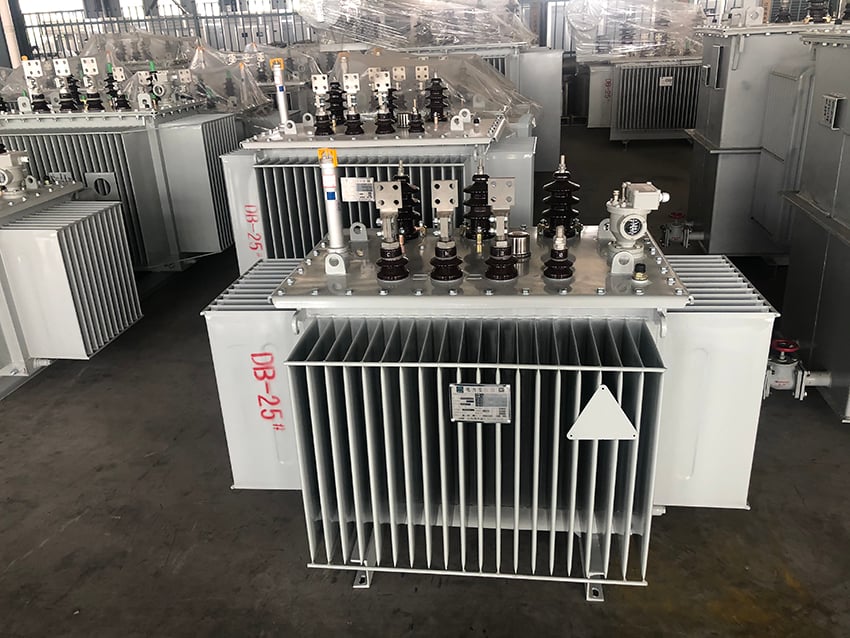
An oil-filled transformer is a critical asset in power transmission and distribution networks, relying on insulating oil for both dielectric strength and heat dissipation. During operation, electrical losses generate significant heat that must be efficiently removed to prevent insulation degradation and ensure reliable service. The cooling methods for oil-filled transformers directly influence thermal performance, loading capacity, and operational lifespan. Understanding how different transformer cooling systems affect performance is essential for selecting the right approach, balancing cost, efficiency, and reliability. This article explores the primary oil-filled transformer cooling techniques, their impact on performance, and how to choose the optimal transformer thermal management strategy for your application.
Part1. Why Is Cooling Important in Oil immersed Transformers?
The importance of effective cooling in an oil-immersed transformer cannot be overstated. When a transformer operates, energy losses from windings and core are converted into heat. Without adequate heat dissipation, temperatures rise, leading to:
• Accelerated insulation aging: Every 10°C reduction in operating temperature approximately doubles insulation life.
• Oil quality deterioration: Excessive heat breaks down transformer oil, reducing its dielectric strength.
• Increased risk of failure: Hot-spot temperatures exceeding prescribed limits can cause winding insulation failure and even explosive accidents.
The hot-spot temperature is the most critical limiting factor in transformer loading and must remain within IEC 60076-2 standards — typically capped at 78°C rise over ambient for oil-filled units. Proper transformer cooling design ensures these limits are respected, directly impacting operational safety, reliability, and economic lifespan.
Part2. What Are Cooling Methods in Oil-Filled Transformers?
Cooling methods for oil-filled transformers are classified based on how oil and air (or water) circulate to remove heat. The international standard IEC 60076 uses a four-letter code to designate cooling modes:
Oil Circulation |
External Cooling |
O – Oil Natural |
A – Air Natural |
F – Oil Forced |
F – Air Forced |
D – Oil Directed |
W – Water Forced |
Combining these yields designations like ONAN, ONAF, OFAF, and ODAF (or KNAN, KNAF for kerosene-based fluids). These transformer cooling systems range from fully passive natural convection to active pumped and fan-assisted designs, each suited to different capacity and reliability requirements.
Part3. Common Cooling Methods for Oil Transformers
ONAN (Oil Natural Air Natural)
The simplest and most reliable oil-filled transformer cooling method. Oil circulates naturally by thermosyphon — hot oil rises, cools in radiators, and sinks back. Air flows over radiators by natural convection. This transformer cooling technique is widely used in distribution transformers due to its zero maintenance and silent operation.
ONAF (Oil Natural Air Forced)
Adds fans to force air over radiators while oil still circulates naturally. This cooling method for transformers can increase capacity by 25–50% compared to ONAN. Fans are often temperature-controlled, activating only when needed. However, fan operation introduces maintenance needs and noise.
OFAF (Oil Forced Air Forced)
Uses pumps to force oil circulation combined with forced air over radiators. This transformer cooling system delivers higher cooling capacity than ONAN or ONAF, suitable for medium-to-large power transformers. The pump ensures consistent oil flow regardless of thermal driving forces.
ODAF (Oil Directed Air Forced)
A sophisticated oil-immersed transformer cooling technique where pumps direct oil flow specifically through winding hot spots. This provides uniform temperature distribution and maximum thermal efficiency, making it ideal for ultra-high-capacity transformers. Studies show ODAF (directed flow) can enhance cooling capacity by over 20% compared to non-directed ONAN flow.
OFWF / ODWF (Oil/Water Forced)
Uses water as the external cooling medium in heat exchangers. Water offers superior thermal conductivity, suitable for large power transformers in hydropower plants or industrial settings. However, water ingress risks require careful monitoring.
Part4. How Cooling Methods Affect Transformer Performance
Temperature Rise and Loading Capacity
The choice of cooling method for oil-filled transformer directly determines its rated capacity. Forced cooling (ONAF, OFAF) allows higher continuous loading than natural cooling (ONAN). The temperature rise of windings is capped at 65°C average and 78°C hot-spot over ambient per IEC 60076-7. More efficient cooling keeps temperatures lower, creating thermal margin for overloads or high ambient conditions.
Lifespan and Reliability
Thermal aging is the primary factor determining transformer life. As noted, every 10°C reduction in operating temperature can double insulation life. The hot-spot temperature is the key metric — studies show reducing it by even 10°C has a strong direct impact on power transformer lifetime. Advanced cooling like ODAF reduces hot-spot gradients by directing oil to the hottest regions.
Efficiency and Losses
While cooling systems themselves consume energy (fans, pumps), the overall system efficiency improves when lower winding temperatures reduce copper losses (I²R). Forced-air cooling can increase a transformer’s capacity by 25–50%, but the auxiliary equipment adds parasitic losses and maintenance requirements.
Noise and Environmental Impact
ONAN cooling is silent, meeting Class 0 environmental noise requirements (<40 dB). ONAF and OFAF introduce fan and pump noise, which may be a concern in urban installations. Hybrid systems can run passively under low load, activating fans only when necessary to minimize noise.
Maintenance and Operational Complexity
ONAN requires virtually no maintenance — just periodic oil quality checks. ONAF adds fan maintenance (bearings, motors, dust). OFAF and ODAF introduce pumps, valves, and control systems, significantly increasing complexity and failure points.
Part5. How to Choose the Right Cooling Method
Selecting the optimal transformer cooling system depends on several factors:
Factor |
Consideration |
Load profile |
Continuous high loads favor OFAF/ODAF; variable loads may suit ONAF with fan backup |
Ambient temperature |
High ambient reduces cooling efficiency — may require derating or forced cooling |
Installation location |
Urban/silent areas: ONAN or ONAF with fan-off under low load; remote/industrial: OFAF/ODAF acceptable |
Budget |
ONAN has lowest capital and operating cost; OFAF/ODAF have higher initial and maintenance costs |
Reliability requirement |
Critical applications benefit from redundant fans/pumps or fail-safe natural convection backups |
Space constraints |
Forced cooling can reduce radiator size for a given capacity |
For modern installations, hybrid approaches are gaining popularity — using natural convection under normal loads and activating forced cooling only when temperatures or loads exceed thresholds. This balances energy efficiency, noise, and reliability.
Advanced computational fluid dynamics (CFD) tools and AI-based thermal monitoring are increasingly used to optimize cooling design and predict thermal behavior under varying conditions.
FAQ
Q1: What is the most common cooling method for oil-filled transformers?
A: ONAN (Oil Natural Air Natural) is the most common for distribution transformers due to its simplicity, reliability, and zero maintenance.
Q2: Can I upgrade an ONAN transformer to ONAF?
A: Yes, adding fans to an ONAN transformer can increase its capacity by 25–50%. However, ensure the radiator design and oil circulation can support the increased heat dissipation.
Q3: What is the difference between OFAF and ODAF?
A: OFAF forces oil circulation through the entire transformer, while ODAF directs oil specifically through winding hot spots, providing more uniform temperature distribution and higher efficiency.
Q4: How does ambient temperature affect transformer cooling?
A: Higher ambient temperatures reduce the thermal gradient between the transformer and air, decreasing cooling effectiveness. Transformers may need derating or forced cooling in hot climates.
Q5: How often should transformer oil be checked?
A: Routine oil sampling and dissolved gas analysis (DGA) are recommended annually or per manufacturer guidelines to monitor oil quality and detect incipient faults.
Q6: What is the temperature rise limit for oil-filled transformers?
A: Per IEC 60076-7, average winding temperature rise is capped at 65°C over ambient, and hot-spot rise at 78°C.
Conclusion
The cooling method chosen for an oil-filled transformer is a critical design decision that affects performance, lifespan, efficiency, and operating cost. From the silent simplicity of ONAN to the high-capacity precision of ODAF, each transformer cooling system offers distinct advantages and trade-offs. Understanding how these cooling methods for oil-filled transformers influence thermal behavior enables informed selection that balances reliability, cost, and environmental constraints. As power grids evolve toward higher efficiency and sustainability, innovations in transformer thermal management — including biodegradable fluids, nanofluids, and AI-optimized cooling — will continue to shape the future of transformer engineering.
Table of Contents
- Introduction
- Part1. Why Is Cooling Important in Oil immersed Transformers?
- Part2. What Are Cooling Methods in Oil-Filled Transformers?
- Part3. Common Cooling Methods for Oil Transformers
- Part4. How Cooling Methods Affect Transformer Performance
- Part5. How to Choose the Right Cooling Method
- FAQ
- Conclusion