 EN
EN
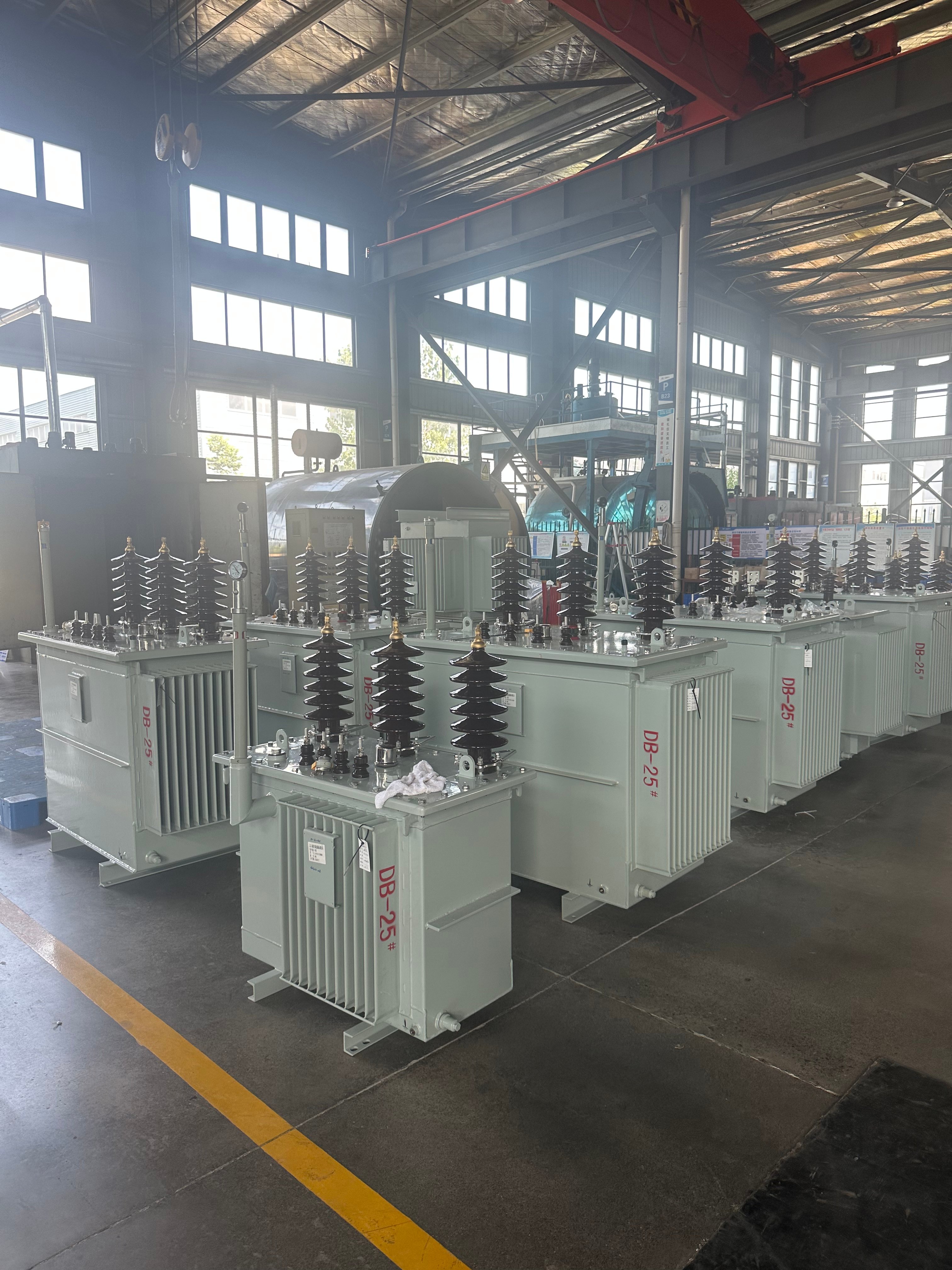
Oil-filled transformers are the backbone of industrial and commercial power systems. They are reliable, cost-effective, and built to last—but only if you inspect them the right way. Neglecting periodic inspections doesn't just shorten equipment life; it leads to unplanned outages, safety hazards, and repair bills that could have been prevented.
This article walks you through why oil-filled transformer inspections matter, how often to schedule them, 7 critical checkpoints you cannot afford to miss, how to build an effective inspection routine, and answers to common questions.
──────────────────────────────────────────────────
Why Do Oil-Filled Transformers Need Periodic Inspections?
Oil-filled transformers serve a dual purpose: the insulating oil provides dielectric strength while also dissipating heat generated during operation. Over time, however, several factors degrade performance:
• Oil quality deteriorates —moisture ingress, oxidation, and contamination reduce the oil's insulating properties. High moisture content can lead to dielectric breakdown.
• Seals fail —gaskets and gasketed joints age, allowing leaks that let moisture in and oil out.
• Internal faults develop —dissolved gas analysis (DGA) can reveal issues like arcing, overheating, or partial discharge long before they become catastrophic.
• Mechanical components wear —tap changers, cooling fans, and pressure relief devices require regular verification.
The cost of a single transformer failure—including downtime, replacement, and lost production—far outweighs the cost of routine inspection. Scheduled checks catch small problems early, turning potential failures into planned maintenance tasks.
──────────────────────────────────────────────────
How Often Should You Inspect an Oil-Filled Transformer?
Inspection frequency depends on operating conditions, voltage class, and criticality. Here's a practical framework:
Inspection Type |
Frequency |
Daily/Per-shift visual checks |
Every shift or at least daily during normal operation |
Oil sampling and testing |
Annually for outdoor units; every two years for indoor units |
Minor overhaul (small repair) |
Annually |
Major overhaul (comprehensive) |
Every 5–10 years depending on operating history |
Comprehensive diagnostics |
Every 3–5 years for normal units; every 2 years for aged or heavily loaded units |
Special circumstances call for unscheduled inspections:
• After a short-circuit event or lightning strike
• When the transformer has been out of service for more than 15 days
• If unusual sounds, odors, or temperature changes are observed
For critical infrastructure or harsh environments—such as high-humidity coastal or offshore installations—consider a more aggressive inspection schedule.
──────────────────────────────────────────────────
7 Critical Maintenance Points for Oil-Filled Transformer Inspections
These seven checkpoints cover the most failure-prone areas of an oil-filled transformer. Missing any of them could mean missing the early warning signs of a major fault.
1. Oil Level, Color, and Temperature
What to check: The oil level should correspond to the current oil temperature on the oil level gauge. The oil should appear clear and free of carbon particles—dark or cloudy oil suggests contamination or overheating.
Temperature limits:
• Top oil temperature should not exceed 85°C under normal conditions (with 95°C as an absolute maximum)
• Monitor winding temperature via the temperature indicator as well
Why it matters: Low oil level exposes windings, increasing the risk of flashover. High temperature accelerates oil degradation and insulation aging.
2. Bushing and Porcelain Insulators
What to check: Look for cracks, chips, carbon tracks, or signs of electrical discharge on bushing surfaces. Bushings should be clean and free of oil residue. Verify oil levels in oil-filled bushings if applicable.
Why it matters: Cracked or contaminated bushings are a common path for flashover and external faults.
3. Leaks and Seals
What to check: Inspect all tank welds, flange joints, and gasketed connections for oil seepage. Even minor sweating can indicate seal degradation.
Why it matters: Leaks not only waste oil but also allow moisture and air to enter the tank. Moisture reduces dielectric strength; oxygen accelerates oxidation.
4. Cooling System (Radiators and Fans)
What to check: Radiator fins should be clean and unobstructed. For forced-air cooled units, verify that cooling fans operate properly and that airflow is not blocked. Check that all radiator sections feel uniformly warm—cold spots may indicate blocked oil circulation.
Why it matters: Inefficient cooling forces the transformer to run hotter, shortening insulation life and accelerating oil degradation.
5. Gas Relay (Buchholz Relay) and Pressure Relief Devices
What to check: Inspect the gas relay for accumulated gas and ensure it is fully filled with oil. Test the relay's trip and alarm functions annually. Confirm pressure relief devices and explosion-proof diaphragms are intact.
Why it matters: The gas relay is the first line of defense against internal arcing and severe faults. A malfunctioning relay can leave the transformer unprotected.
6. Breather (Silica Gel) and Oil Conservator
What to check: The silica gel in the breather should be blue when dry. If it has turned pink or white, it has absorbed moisture and needs replacement. Verify that the breather oil seal (if equipped) has adequate oil.
Why it matters: The breather allows the transformer to "breathe" as oil expands and contracts with temperature changes. If the desiccant is saturated, moisture enters the conservator and ultimately the main tank.
7. Electrical Tests—Insulation Resistance, Winding Resistance, and DGA
What to check: These are typically performed during scheduled outages or major overhauls:
• Insulation resistance (Megger test): Measure R60 and R15 to calculate the absorption ratio. A ratio 1.3 indicates dry insulation; ≤1.3 suggests moisture has infiltrated.
• Winding DC resistance: Detects loose connections, broken strands, or tap changer issues.
• Dissolved Gas Analysis (DGA): Annual oil sampling for key gases—acetylene indicates arcing, ethylene suggests overheating, and hydrogen points to partial discharge.
Why it matters: These tests reveal internal conditions that cannot be seen from outside. DGA, in particular, is the most powerful diagnostic tool for catching hidden faults.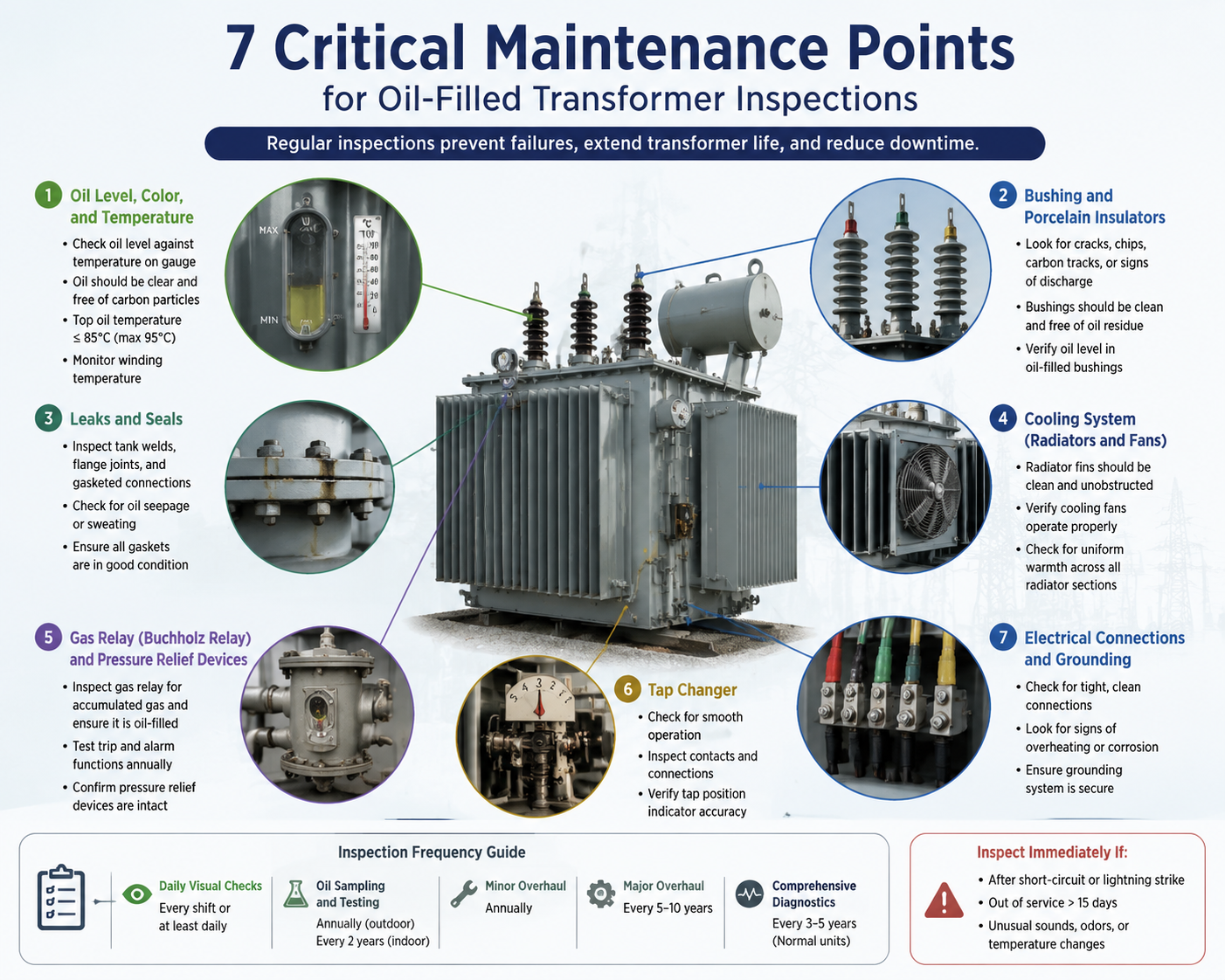
──────────────────────────────────────────────────
How to Build an Effective Periodic Inspection Routine
An inspection program is only as good as its execution. Here's how to ensure your routine delivers results:
1. Create a tiered schedule. Layer your inspection frequencies:
• Daily: temperature, oil level, sound, visual leaks
• Monthly: bushing cleanliness, breather condition, fan operation
• Quarterly: detailed log review, infrared thermography (if available)
• Annually: oil sampling for DGA and electrical tests
2. Maintain accurate records. Trending is more valuable than single-point data. Track oil temperature trends, load profiles, and DGA results over time. A gradual increase in any parameter tells you more than a single "pass" reading.
3. Follow a written procedure. Use a checklist for every inspection. It ensures consistency and prevents missed steps—especially during shift handovers or when multiple technicians are involved.
4. Know the standards. Follow recognized standards such as IEC 60422, GB/T 7595, and DL/T 596 to ensure compliance and best practice.
5. Train personnel. Technicians should understand not only how to inspect but why each point matters. A trained eye spots subtle signs—like a faint discoloration on a bushing or a slight change in sound—that untrained eyes miss.
6. Act on findings promptly. If an inspection reveals a fault—low oil, high temperature, gas accumulation—investigate immediately and take corrective action. Small issues left unaddressed become large failures.
──────────────────────────────────────────────────
FAQ: Oil-Filled Transformer Periodic Inspections
Q: Can I visually inspect a transformer while it's energized?
A: Yes, external visual inspections can be performed while energized, but always maintain safe distances (at least 0.7 meters for medium voltage) and follow lockout/tagout and PPE requirements. Internal inspections or tests requiring physical contact must be done with the transformer de-energized and grounded.
Q: What are the red-flag conditions that require immediate shutdown?
A: Immediately de-energize the transformer if you observe: loud internal explosions, abnormal and rapidly rising temperature, severe oil leakage, oil spraying from the conservator or pressure relief device, bushing flashover or severe cracking, or smoke/fire from the unit.
Q: How do I interpret DGA results?
A: The key gases and their potential causes: acetylene (C₂H₂) → arcing; ethylene (C₂H) → thermal fault 300°C; hydrogen (H₂) → partial discharge; carbon monoxide (CO) and carbon dioxide (CO₂) → paper insulation degradation. A significant increase in any gas between samples is more concerning than absolute values.
Q: How often should oil be replaced?
A: Oil replacement is not routine—it is done when DGA shows persistent contamination, the oil fails dielectric strength tests, or the unit has been in service for 15+ years under severe conditions. When replacing, thoroughly clean the tank and flush with approved oil before filling.
Q: What is the difference between a minor and major overhaul?
A: A minor overhaul (typically annual) includes external cleaning, leak repair, oil topping, bushing inspection, relay testing, and electrical testing. A major overhaul (5–10 years) involves draining oil, lifting the cover or core, inspecting windings and core components, replacing gaskets, and full insulation drying if needed.
──────────────────────────────────────────────────
Conclusion
Oil-filled transformer inspections are not about checking a box—they are about protecting your most critical power asset. The 7 maintenance points covered here—oil condition, bushings, leaks, cooling systems, gas relays, breathers, and electrical tests—form the backbone of a reliable inspection program.
What to do next:
1. Review your current inspection schedule against the frequency guidelines above.
2. Ensure you have a documented checklist covering all 7 critical points.
3. Schedule your next oil sampling and DGA analysis if it has been over a year.
4. Train your team on early warning signs—small changes matter.
A transformer that is routinely inspected is a transformer that runs reliably. Make periodic inspections a priority, and you will avoid the costly failures that catch the unprepared.