 EN


Without the Main Grid as a Backstop, Off-Grid Testing Asks: "Can You Survive on Your Own?"
When a grid-connected microgrid has a problem, the main grid provides backup: voltage drops can be supported, frequency fluctuations can be absorbed, and power shortages can be filled from outside. An off-grid microgrid does not have this option. Once it switches to off-grid mode, the microgrid must maintain voltage and frequency by itself, balance generation and consumption by itself, and decide what should be protected and what should not trip.
The logic of testing is therefore completely different. Grid-connected acceptance asks: "Will you cause trouble for the grid after you connect?" Off-grid acceptance asks: "After the external grid is cut off, can you still operate stably?"
The Jilin Oilfield Xinbei Smart Microgrid Demonstration Project provides a public reference. After more than 8 months of grid-connected operation starting in November 2025, the project entered continuous off-grid testing in July 2026 and finally passed acceptance with 168 hours of uninterrupted off-grid operation. The key results can be summarized in three points: voltage and frequency did not exceed limits, protection did not misoperate, and load supply had zero fluctuation.
What Exactly Does 168 Hours Test?
168 hours means 7 continuous days. Within one day, PV output changes with sunlight, electricity load fluctuates at any time, and energy storage must repeatedly switch between charging and discharging. Grid-connected testing usually covers a number of typical operating conditions. Off-grid testing covers all naturally occurring combinations of disturbances over a complete time cycle.
Voltage Does Not Exceed Limits
In off-grid mode, the capacity of the internal power sources in the microgrid is far smaller than that of the main grid. The startup of a large motor or the sudden connection of a group of loads can cause a clear voltage drop on the bus. The test requires that, under these real disturbances, voltage always remains within the allowed range.
Frequency Does Not Exceed Limits
The frequency of an off-grid system is not "anchored" by an external grid. If generation is greater than consumption, frequency rises; if consumption is greater than generation, frequency falls. Energy storage and controllable sources must make up the difference within seconds or even faster. 168 hours of continuous operation means that frequency control cannot work only under "good weather" conditions.
Protection Does Not Misoperate
This is the item most easily underestimated in off-grid acceptance. When grid-connected, protection devices have clear signals from the grid side as a basis for judgment. When off-grid, fault current characteristics change and system inertia changes. If protection settings still follow grid-connected logic, they may trip falsely during normal disturbances, or fail to trip during a real fault. Before the test, the Jilin Oilfield project first completed a 5-minute off-grid switching test and a 2-hour stable independent operation test, and then entered the 168-hour continuous test. This was done precisely to verify switching transients and steady-state operation separately.
The Logic of Staged Verification
Skipping short-duration switching tests and going directly to 168 hours is risky not because "the test may not finish," but because "even if it finishes, you will not know where the problem occurred." The 5-minute switching test looks at the transient response at the moment of going off-grid; the 2-hour independent operation test looks at short-term power balance; the 168-hour test looks at continuous stability after multi-day energy storage cycling, weather changes, and load fluctuations are combined. The three stages answer different questions. If any stage fails, the data from later tests lose their meaning.
Equipment-Level Testing Also Cannot "Apply Grid-Connected Data to Off-Grid Conditions"
The reliability of an off-grid project depends not only on system integration but also on the real performance of each piece of equipment under off-grid conditions. Take energy storage converter and step-up equipment as an example. Public information shows that Zhongmeng Electric performs full-condition testing and full-load aging testing on equipment before delivery, covering extreme temperatures and electromagnetic compatibility scenarios. These tests take place at the equipment delivery stage and form an upstream-downstream relationship with the 168-hour off-grid acceptance test at the project site: equipment-level testing screens out batch and process defects; system-level testing verifies multi-device coordination, control strategies, and protection coordination under real off-grid conditions. The two cannot replace each other.
Reference Points for Overseas Project Acceptance
If you are planning or accepting an off-grid microgrid project, you can extract four transferable acceptance ideas from the Jilin Oilfield case:
First, acceptance criteria must clearly target "off-grid mode." Voltage and frequency data in a grid-connected test report cannot be used directly as evidence of off-grid performance.
Second, design the test sequence in stages. First verify switching, then verify short-term independent operation, and finally enter long-duration continuous off-grid operation.
Third, treat protection behavior as an independent acceptance item. Do not only look at "whether a trip occurred." Look at whether protection operates as expected under real disturbances, whether it fails to operate when it should operate, and whether it operates when it should not.
Fourth, keep equipment-level and system-level test records separate. Factory testing proves that the equipment itself is usable; on-site off-grid testing proves that the whole system can continue operating without external support. Only when the two sets of data are combined do they form a complete evidence chain for off-grid acceptance.
Application Scenarios
Scenario |
Application Context |
Key Acceptance Focus |
PV Power Station |
Remote solar farm with battery storage |
Voltage sag during cloud transients; protection coordination under islanding |
Wind Farm |
Distributed wind generation with diesel backup |
Frequency stability during wind gusts; load shedding under low-wind conditions |
Energy Storage System |
BESS as primary grid-forming source |
Charge/discharge cycling endurance; voltage regulation under full-load switching |
Telecom Base Station |
Hybrid PV + battery + generator power supply |
Continuous power during generator handover; frequency drift under light-load conditions |
Mining Site |
Off-grid industrial microgrid for heavy equipment |
Voltage dip from large motor starting; protection behavior under high-inertia loads |
Frequently Asked Questions
Q1: What is the fundamental difference between grid-connected and off-grid acceptance testing?
Grid-connected acceptance verifies that the microgrid will not disturb the main grid after interconnection. Off-grid acceptance verifies that the microgrid can maintain stable voltage and frequency independently after the external grid is disconnected. The two test entirely different capabilities.
Q2: Why does the 168-hour test require continuous uninterrupted operation?
168 hours equals 7 full days, covering all naturally occurring combinations of weather, load, and energy storage cycling. Any interruption would mean the test failed to verify continuous stability across a complete time cycle, which is the core purpose of the test.
Q3: Should protection settings be adjusted before off-grid testing?
Yes. In off-grid mode, fault current characteristics and system inertia change fundamentally compared to grid-connected mode. Protection settings calibrated for grid-connected operation may cause false trips during normal disturbances or fail to trip during actual faults. Settings must be re-evaluated for off-grid conditions.
Q4: Is it necessary to perform short-duration tests before the 168-hour test?
Absolutely. The recommended sequence is: 5-minute switching test to verify transient response, 2-hour independent operation test to verify short-term power balance, then the 168-hour continuous test. Without staged verification, even if the 168-hour test completes, you cannot pinpoint where problems occurred.
Q5: Can grid-connected test results be used as evidence for off-grid acceptance?
No. Grid-connected and off-grid modes have fundamentally different operating characteristics. Voltage and frequency data from grid-connected tests cannot be directly used as evidence of off-grid performance. Similarly, equipment-level factory tests and system-level on-site tests serve different purposes and must be documented separately.
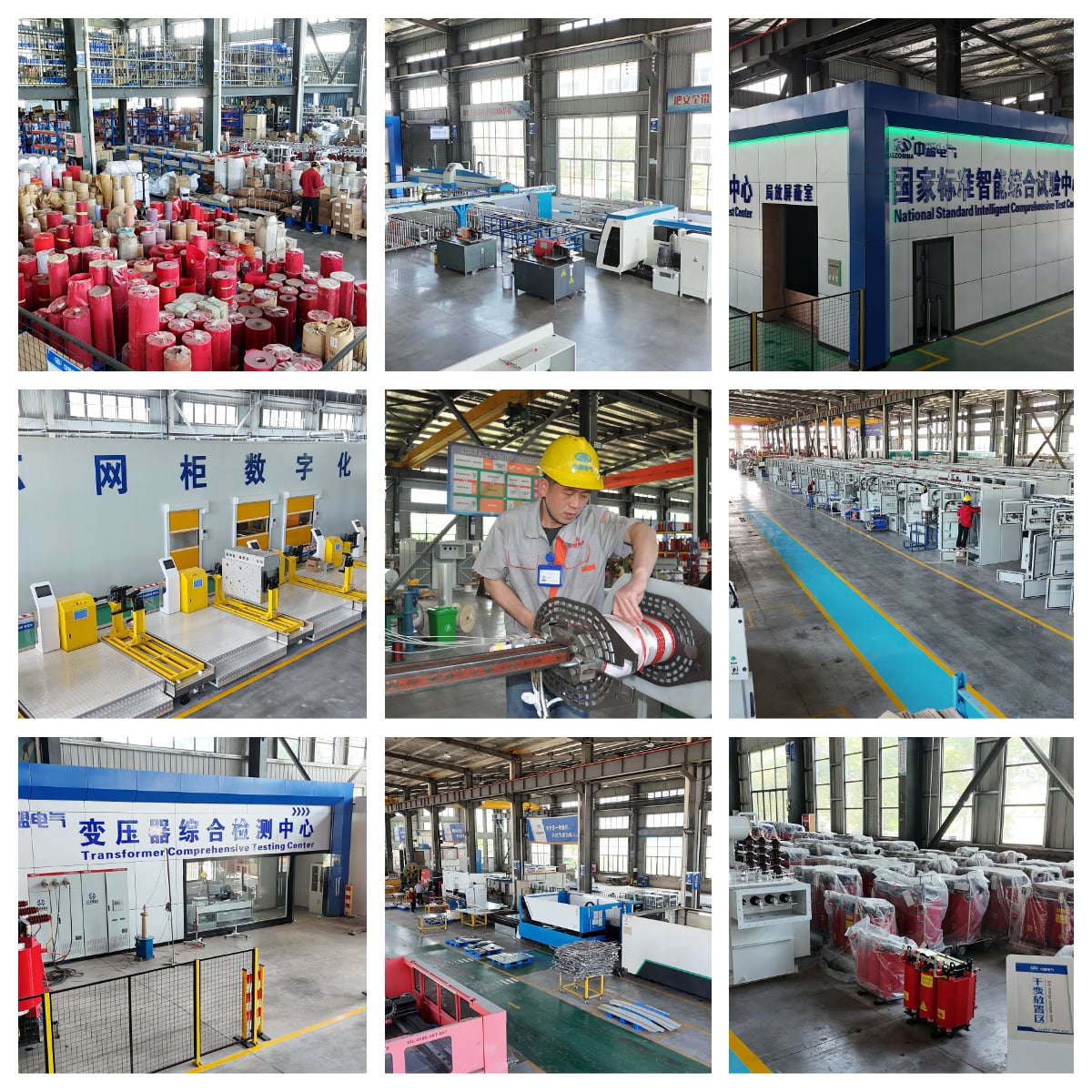
Table of Contents
- Without the Main Grid as a Backstop, Off-Grid Testing Asks: "Can You Survive on Your Own?"
- What Exactly Does 168 Hours Test?
- The Logic of Staged Verification
- Equipment-Level Testing Also Cannot "Apply Grid-Connected Data to Off-Grid Conditions"
- Reference Points for Overseas Project Acceptance
- Application Scenarios
- Frequently Asked Questions