 EN
EN

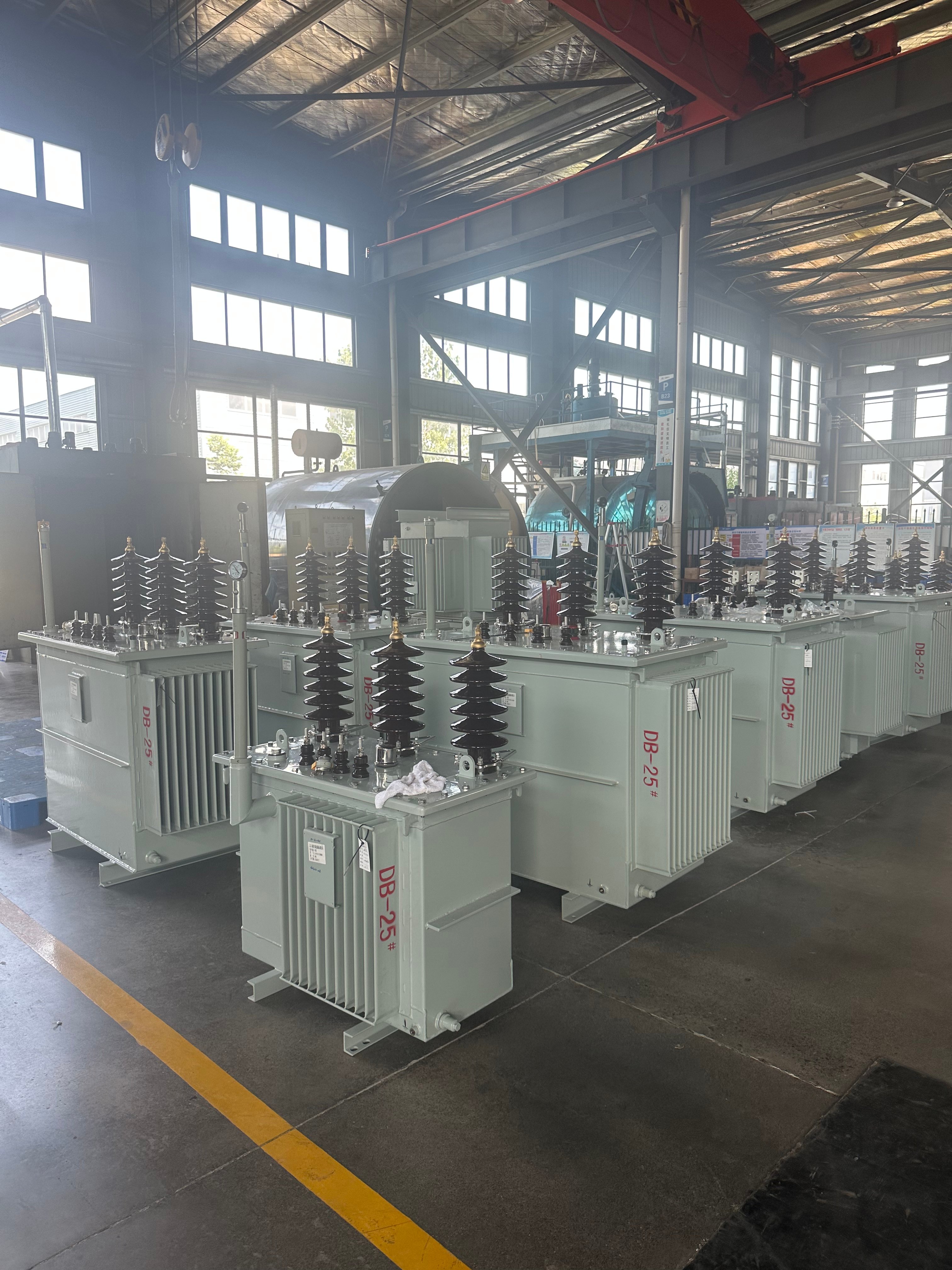
When electricity travels from a massive power plant to your home or office, it undergoes multiple voltage transformations. The final and perhaps most crucial step happens at a distribution transformer—a device that steps down medium-voltage electricity to safe, usable levels for end consumers. But what exactly is a distribution transformer, and how does it work? This article provides a comprehensive answer, while also clarifying the often-confused distinction between a distribution transformer and a power transformer, followed by a practical FAQ section.
Part 1: What Is a Distribution Transformer?
A distribution transformer is a static electrical device that converts high/medium voltage—typically ranging from 2.4 kV to 36 kV—into low voltage (such as 120V, 230V, or 400V) suitable for residential, commercial, and light industrial use. It operates on the principle of electromagnetic induction and is characterized by its relatively small size, lower power ratings (usually between 25 kVA and 5 MVA), and high efficiency at partial loads.
Common Types of Distribution Transformers
Based on cooling and insulation media, distribution transformers fall into two main categories:
Oil-immersed distribution transformers: Filled with mineral oil that serves both as insulation and coolant. They are widely used in outdoor installations such as utility poles and ground-level pads.
Dry-type distribution transformers: Use air or epoxy resin for insulation. They are safer for indoor applications where fire safety is a concern, such as in commercial buildings and tunnels.
Part 2: How Does a Distribution Transformer Work?
The working principle of a distribution transformer is rooted in Faraday's Law of Electromagnetic Induction. At its core, the transformer consists of:
Magnetic core: Made of high-permeability silicon steel laminations to provide a low-reluctance path for magnetic flux.
Primary winding: Connected to the incoming medium-voltage supply.
Secondary winding: Connected to the outgoing low-voltage load.
When an alternating current flows through the primary winding, it generates an alternating magnetic flux in the core. This flux links with the secondary winding and induces an electromotive force (EMF) across it. The ratio of primary to secondary voltage is directly proportional to the ratio of turns in the windings—this is known as the turns ratio.
Example: A distribution transformer with a turns ratio of 30:1 will step down 11,000 volts on the primary side to approximately 367 volts on the secondary side (accounting for minor losses), which is then adjusted to standard utilization voltages like 400V three-phase or 230V single-phase.
Part 3: Advanced Functions and System Role of Distribution Transformers
Beyond simple voltage conversion, distribution transformers play several critical roles in the electrical grid:
Voltage regulation via tap changers: Most distribution transformers are equipped with off-load tap changers (or, in some cases, on-load tap changers) to adjust the turns ratio slightly. This compensates for incoming voltage fluctuations, ensuring that consumers receive stable voltage within acceptable limits.
Grounding and system stability: The secondary side of a distribution transformer often provides a neutral point for grounding. This is essential for protecting equipment and personnel against fault currents and overvoltages.
In the larger power system, distribution transformers are the most numerous type of transformer, forming the vital link between the transmission grid and end-user facilities.
Part 4: Distribution Transformer vs Power Transformer – What Are the Main Differences?
A common source of confusion is the distinction between a distribution transformer and a power transformer. While both operate on the same electromagnetic principles, they serve entirely different purposes. The table below summarizes their key differences:
Feature |
Power Transformer |
Distribution Transformer |
Voltage rating |
High (≥ 69 kV, up to 765 kV) |
Medium to low (≤ 36 kV) |
Power capacity |
Large (typically 5 MVA, often 100 MVA+) |
Small to medium (25 kVA – 5 MVA) |
Location in grid |
Between generation and transmission, or between transmission and sub-transmission |
At the end of the distribution network, close to consumers |
Load characteristics |
Operates at near-full load most of the time |
Operates at partial load for significant periods; sees peak loads during daytime |
Efficiency design |
Optimized for maximum efficiency at full load |
Optimized for maximum efficiency at 50–70% of full load |
Size and weight |
Very large, heavy, installed in fenced substations |
Compact, pole-mounted or pad-mounted |
Tap changer |
Usually equipped with on-load tap changers for dynamic regulation |
Typically equipped with off-load (de-energized) tap changers; on-load types are less common |
Cooling |
Forced oil/air or water cooling (OFWF, ONAF) |
Natural oil/air cooling (ONAN) or dry-type air cooling |
In essence, power transformers are designed for high-efficiency bulk power transfer, whereas distribution transformers are optimized for voltage regulation and efficiency under varying, often lighter loads.
Part 5: FAQ – Frequently Asked Questions About Distribution Transformers
This section addresses common queries, incorporating long-tail keywords that users often search for:
5.1 Can a distribution transformer be used as a step-up transformer?
In theory, yes—since transformers are inherently reversible. However, distribution transformers are not designed for step-up applications in practice. Their windings, insulation, and core are optimized for step-down operation with specific voltage ratios. Using one as a step-up transformer can lead to poor regulation, overheating, and reduced lifespan.
5.2 How do I choose the right capacity (kVA rating) for a distribution transformer?
Selecting the correct kVA rating depends on the total connected load, diversity factor, and expected future growth. As a rule of thumb, the transformer's rated capacity should be 125–150% of the calculated peak demand to accommodate temporary overloads without compromising efficiency or longevity. Consulting a professional engineer for a load-flow study is strongly recommended.
5.3 Which is better: oil-immersed or dry-type distribution transformer?
There is no universal "better" option—it depends on the application:
Oil-immersed: Superior for outdoor applications due to lower cost, higher overload capacity, and better cooling efficiency.
Dry-type: Preferable for indoor installations, high-rise buildings, and fire-sensitive areas because it is non-flammable and environmentally safer.
5.4 What is the typical service life of a distribution transformer?
A well-maintained distribution transformer has an expected service life of 25 to 40 years. However, its actual lifespan depends heavily on factors such as winding hot-spot temperature, moisture ingress, overload history, and the quality of routine maintenance (including oil testing for dissolved gases).
5.5 What is an off-load tap changer in a distribution transformer?
An off-load tap changer (also called a no-load tap changer) is a mechanical switch that changes the transformer's turns ratio while the transformer is completely de-energized. It allows utility crews to manually adjust the secondary voltage to compensate for long-term variations in the primary supply, ensuring that end-users receive voltage within regulatory standards.
Conclusion
From power plants to residential neighborhoods, the journey of electricity relies on a chain of transformers. Among them, the distribution transformer stands out as the workhorse of the low-voltage network, performing the essential job of stepping down medium voltage to safe, usable levels through electromagnetic induction. Unlike their larger cousins—power transformers—distribution transformers are smaller, operate efficiently at partial loads, and are installed closer to consumers. By understanding what a distribution transformer is, how it works, and how it compares to power transformers, you gain valuable insight into the backbone of modern electricity distribution. As smart grids and renewable energy sources continue to evolve, distribution transformers are also adapting—becoming more intelligent, efficient, and environmentally friendly than ever before.
Table of Contents
- Part 1: What Is a Distribution Transformer?
- Part 2: How Does a Distribution Transformer Work?
- Part 3: Advanced Functions and System Role of Distribution Transformers
- Part 4: Distribution Transformer vs Power Transformer – What Are the Main Differences?
- Part 5: FAQ – Frequently Asked Questions About Distribution Transformers
- Conclusion