 EN
EN

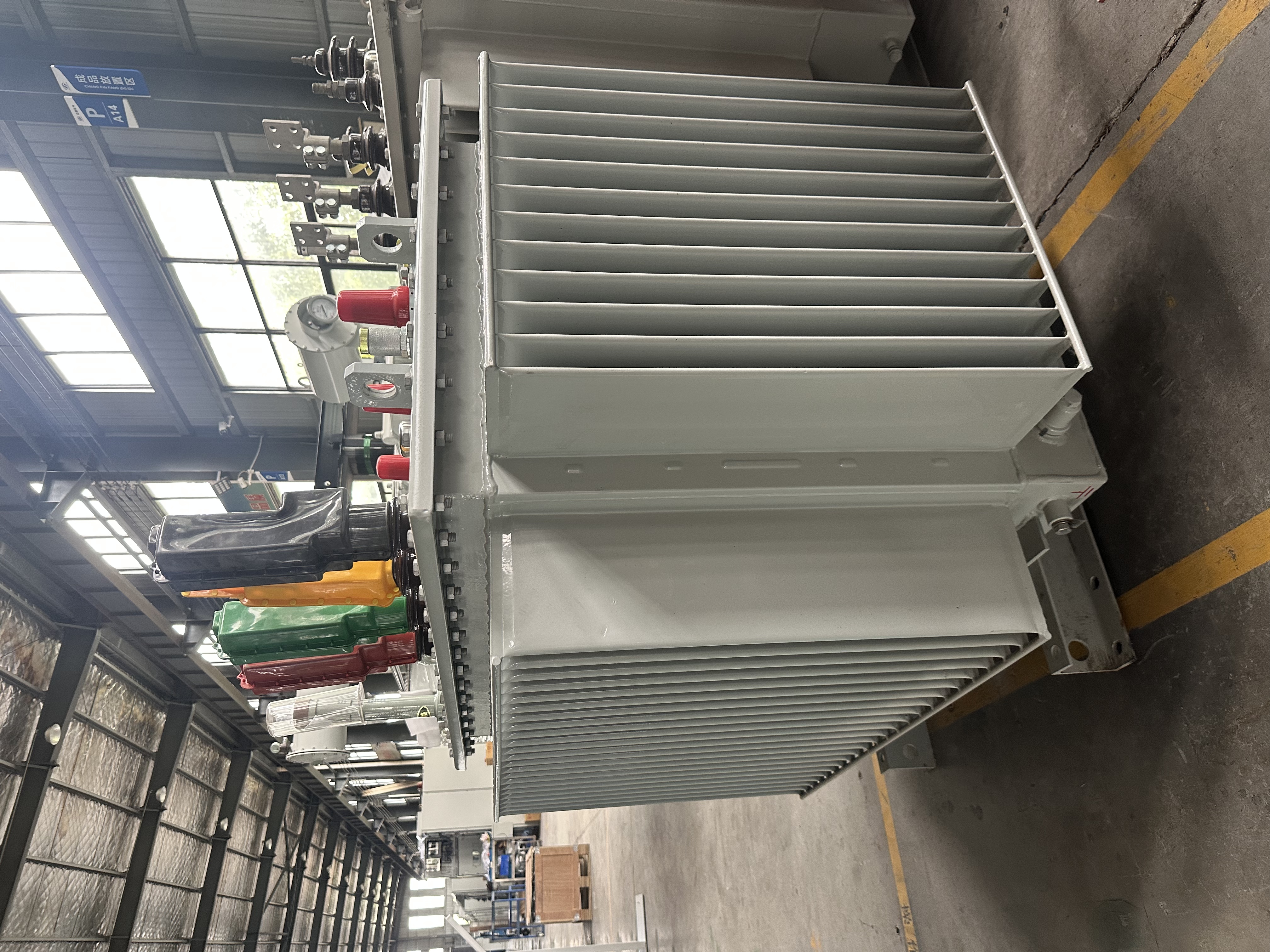
Choosing the right distribution transformer for industrial and commercial use determines your project's energy efficiency, reliability, and long-term cost. A mismatched transformer wastes power, shortens equipment life, and creates safety risks. This guide walks through the key decisions step by step.
1. Determine Voltage Ratio and Capacity
Match the Voltage Ratio
Confirm the utility supply voltage (typically 10kV, 12kV, or 13.8kV) and the required secondary voltage (480V, 400V, or 208Y/120V). A voltage mismatch makes the transformer unusable.
Calculate Capacity
• List all connected loads: motors, lighting, HVAC, UPS systems
• Apply a demand factor: commercial 0.6–0.8, industrial 0.7–0.9, data center 0.9–1.0
• Convert to kVA: kVA = kW ÷ power factor (commercial ≈ 0.85, industrial ≈ 0.90)
• Add 15%–25% margin for future growth
Select Tap Changer
Choose between off-load and on-load tap changers. Voltage-sensitive loads such as precision manufacturing and data centers require tap changer flexibility.
Example: 2000 kVA Transformer Amps
Formula: I = S ÷ (√3 × V)
Voltage |
Rated Current |
Typical Use |
480 V |
2,406 A |
North American commercial/industrial |
415 V |
2,782 A |
European/Asian industrial |
400 V |
2,887 A |
European low voltage |
13.8 kV |
83.7 A |
Medium voltage primary |
33 kV |
35 A |
Medium voltage primary |
Rated current is the continuous operating limit. Lower voltage means higher current, so low-voltage conductors and switchgear must be sized accordingly. Adding forced air cooling (ONAF) increases capacity by 15%–33%.
2. Choose Insulation Type Based on Installation Environment
Dry-Type vs. Oil-Immersed
• Dry-type: solid insulation, air-cooled, no liquid leakage risk
• Oil-immersed: mineral or ester oil, better heat dissipation, stronger overload capacity
Match to Location
• Indoor or occupied spaces (commercial buildings, hospitals, data centers) → dry-type
• Outdoor, standalone substations, large industrial loads → oil-immersed
• Floors above the second level in high-rises → dry-type only
Environmental Corrections
• High altitude reduces air cooling efficiency — derate accordingly
• Coastal or corrosive environments require IP54 or higher
• Poor ventilation requires extra attention to heat dissipation
3. Evaluate Load Characteristics and Harmonic Tolerance
Nonlinear Loads
VFDs, UPS systems, LED drivers, and IT equipment generate harmonic currents that cause extra heating and accelerate insulation aging.
K-Factor Ratings
• K-4: moderate harmonics (commercial LED lighting, office equipment)
• K-13: severe harmonics (data centers, industrial VFDs, telecom)
• K-20: extreme harmonics (SCR drives, induction heating)
K-factor transformers are designed to withstand harmonic effects, not eliminate them.
4. Assess Efficiency, Losses, and Lifecycle Cost
No-Load vs. Load Losses
• No-load loss occurs continuously whenever the transformer is energized
• Load loss grows with the square of load current
• Over 20–30 years, loss energy costs can far exceed the purchase price difference
Compliance Standards
• EU Ecodesign Tier 2
• IEC 60076
• DOE 2016 (North America)
Impedance Voltage
Typical distribution transformer impedance is 4%–6%. Low impedance improves voltage regulation but raises short-circuit current, requiring higher-rated switchgear. High impedance limits fault current but worsens voltage regulation.
5. Select Cooling Method and Thermal Rating
Cooling Options
• ONAN: natural oil circulation, natural air cooling — small capacity, well-ventilated areas
• ONAF: natural oil circulation, forced air cooling — higher load in the same footprint
• Dry-type: natural vs. forced air cooling
Temperature Rise and Insulation Class
Temperature rise rating affects service life and overload capability. Insulation class must match maximum operating temperature.
6. Confirm Installation Conditions and Maintenance Strategy
Space and Load-Bearing
• Dry-type transformers are lighter than oil-immersed units of equal capacity, suitable for floor or roof installation
• Oil-immersed units require oil pits, fire barriers, and drainage
Maintenance Comparison
• Dry-type: visual inspection, cleaning, insulation resistance testing every 3–5 years; no oil management
• Oil-immersed: annual oil sampling (DGA, dielectric testing); higher maintenance cost
7. Selection Reference by Application
Application |
Reference Capacity |
Typical Configuration |
Commercial high-rise |
2×2,500 kVA |
ONAN/ONAF, dry-type preferred |
Industrial plant |
1×5 MVA |
ONAN, oil or dry per environment |
Data center |
Based on IT load |
K-13 or K-20 dry-type |
Hospital/school |
Based on actual load |
Dry-type, K-factor per nonlinear load ratio |
FAQ
How many amps is a 2000 kVA transformer good for?
It depends on voltage. At 480V, it handles 2,406 A. At 400V, 2,887 A. At 13.8kV, 83.7 A. Rated current is the continuous limit — do not exceed it long-term.
How do I quickly estimate transformer size?
Rule of thumb: kVA ≈ load kW × 1.25 ÷ power factor. A 1000 kW load at 0.8 power factor needs about 1560 kVA, so select 1600 kVA.
What is the ideal transformer loading?
60%–80% of rated capacity balances efficiency and service life. Below 30%, no-load losses dominate and operation becomes uneconomical.
Dry-type or oil-immersed — which should I choose?
Dry-type for indoor, fire-sensitive locations up to about 5000 kVA. Oil-immersed for outdoor, high-capacity, high-overload applications.
How do harmonics affect transformer selection?
Harmonic currents from VFDs, LED lighting, and UPS systems cause extra winding heat. Use K-factor transformers or oversize capacity in harmonic-rich environments.
Can a transformer run overloaded?
Short-term overload is acceptable depending on cooling, ambient temperature, and initial load level. Sustained overload accelerates insulation aging and shortens life.
Conclusion: Systematic Selection Checklist
• Confirm primary/secondary voltage and frequency
• Calculate maximum demand with growth margin
• Assess nonlinear load ratio and determine K-factor
• Choose dry-type or oil-immersed based on environment
• Verify efficiency standards and lifecycle loss costs
• Confirm cooling method, temperature rise, and protection rating
• Establish maintenance plan and spare parts strategy
Table of Contents
- 1. Determine Voltage Ratio and Capacity
- 2. Choose Insulation Type Based on Installation Environment
- 3. Evaluate Load Characteristics and Harmonic Tolerance
- 4. Assess Efficiency, Losses, and Lifecycle Cost
- 5. Select Cooling Method and Thermal Rating
- 6. Confirm Installation Conditions and Maintenance Strategy
- 7. Selection Reference by Application
- FAQ
- Conclusion: Systematic Selection Checklist