 EN
EN
Selecting a power transformer is one of the most significant infrastructure investments a facility manager or electrical engineer will make. A transformer isn't just a piece of hardware; it is the heart of your electrical distribution system. Choosing incorrectly can lead to catastrophic downtime, excessive energy costs, and safety hazards.
In this guide, we provide a structured, step-by-step framework for selecting a transformer that aligns with your 2026 operational goals, safety requirements, and budget.
Step 1: Analyze Your Load Profile and Capacity
The first step is determining the kVA (kilovolt-ampere) rating. You must calculate not just your current power consumption, but your projected demand.
Calculate Connected Load: Sum the maximum power draw of all equipment.
Apply Demand Factors: Not all machines run at 100% capacity simultaneously. Use a demand factor to reach a realistic "peak load."
Future-Proofing: It is industry best practice to size a transformer for 80% of its rated capacity. This 20% "headroom" allows for future equipment additions and prevents the transformer from running at high temperatures, which exponentially degrades insulation.
Step 2: Select the Insulation Type (Dry vs. Liquid)
The environment of your facility largely dictates whether you should go with a Dry-Type or Liquid-Immersed transformer.
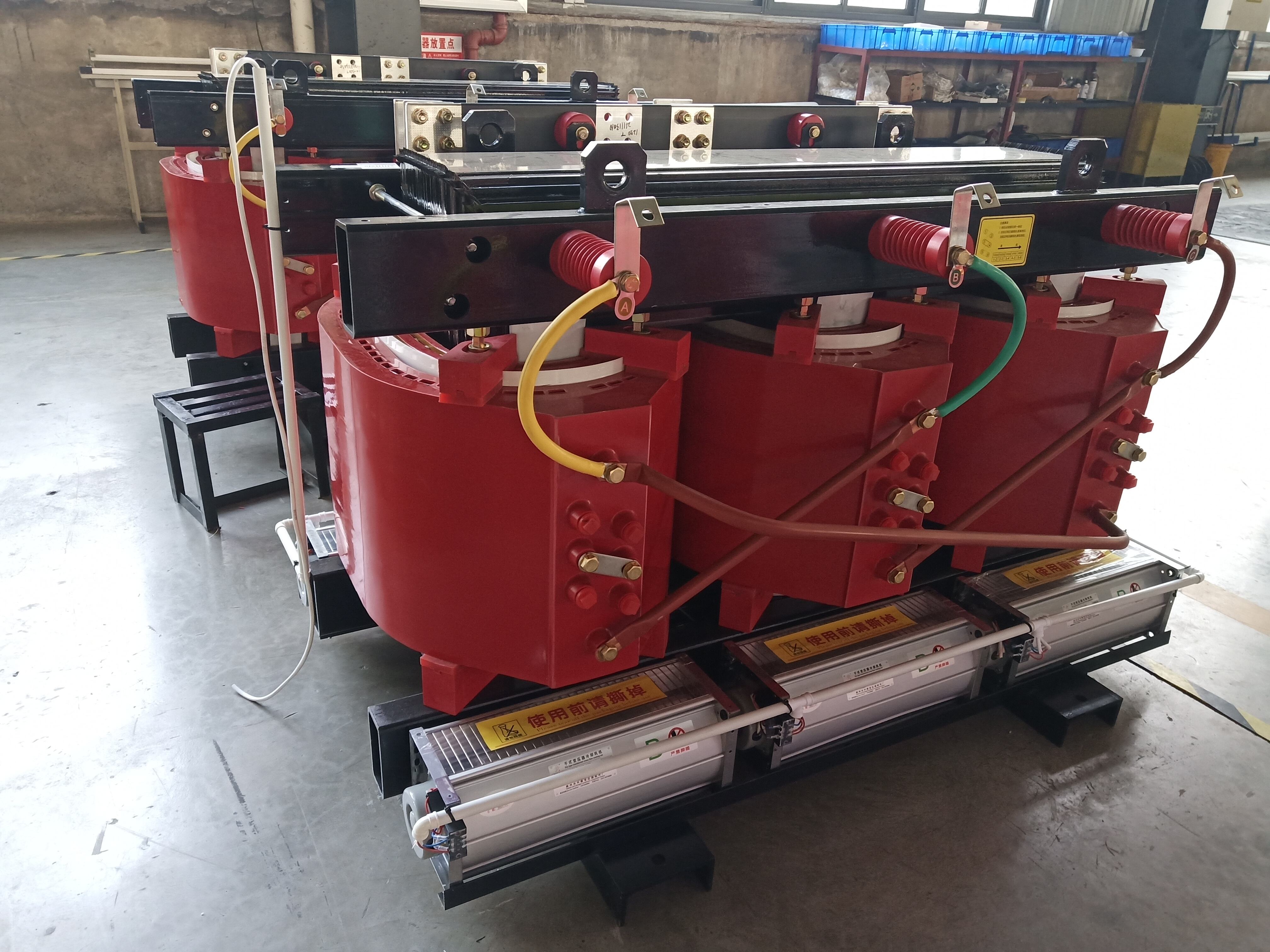
Dry-Type Transformers
Best For: Indoor facilities, high-rise buildings, and areas with strict fire codes (e.g., hospitals, shopping centers).
Advantage: Uses air for cooling; no risk of leaks or toxic spills.
Maintenance: Low; primarily involves cleaning dust from vents.
Liquid-Immersed Transformers
Best For: Outdoor substations, heavy industrial plants, and high-voltage grid connections.
Advantage: Smaller footprint for the same kVA and superior cooling for heavy, fluctuating loads.
Modern Update: In 2026, many facilities are opting for Natural Esters (vegetable-based oil) instead of mineral oil for better fire safety and 100% biodegradability.
Step 3: Define Voltage and Winding Configurations
You must match the transformer to the utility supply and your internal equipment requirements.
Primary/Secondary Voltage: Common industrial ratios include 13.8kV to 480V or 11kV to 415V.
Taps: Ensure the transformer has Tap Changers (typically $\pm 2 \times 2.5\%$). This allows you to adjust the output voltage if the utility supply fluctuates.
Vector Group: Consult with your electrical contractor to ensure the winding connection (e.g., Dyn11) matches your facility’s grounding system and phase displacement requirements.
Step 4: Evaluate Energy Efficiency and TCO
As energy prices rise in 2026, the cheapest transformer up-front is often the most expensive over 20 years. Look beyond the purchase price to the Total Cost of Ownership (TCO).
The "Losses" Factor
No-Load Losses (Core Losses): Energy lost while the transformer is idle.
Load Losses (Copper Losses): Energy lost as heat during operation.
Pro Tip: If your facility operates 24/7 (like a data center), investing in Amorphous Metal Cores can reduce core losses by up to 70%, paying for the price difference in just a few years.
Step 5: Consider Environmental and Safety Ratings
Where will the transformer sit? The physical enclosure is your first line of defense.
-
Enclosure Ratings: * NEMA 1 / IP20: Indoor, clean environments.
NEMA 3R / IP54: Outdoor, rain and sleet protection.
C5-M Coating: Essential for coastal facilities to prevent salt-air corrosion.
K-Factor: If your facility uses many computers, LED drivers, or variable frequency drives (VFDs), you need a K-Rated transformer (e.g., K-13) to handle the heat generated by harmonic distortion.
Step 6: Final Compliance Checklist
Before signing the purchase order, verify that the unit meets international and local standards:
IEEE / ANSI C57 or IEC 60076 (Standard design and testing).
DOE 2016 / 2026 Efficiency Standards (Legal compliance for energy).
UL / CSA Listing (Safety certification).
Summary: The Selection Matrix
| Facility Type | Recommended Type | Key Priority |
| Data Center | Dry-Type (Cast Resin) | Harmonics & Fire Safety |
| Manufacturing Plant | Liquid-Immersed (Ester) | Overload Resilience |
| High-Rise Office | Dry-Type (VPI) | Space & Safety |
| Remote Solar Farm | Liquid-Immersed (Mineral/Ester) | Weather Resistance |
Conclusion
Choosing the right transformer requires balancing immediate capital expenditure with long-term reliability. By following these six steps, you ensure that your facility remains powered, safe, and efficient for the next three decades.
Table of Contents
- Step 1: Analyze Your Load Profile and Capacity
- Step 2: Select the Insulation Type (Dry vs. Liquid)
- Step 3: Define Voltage and Winding Configurations
- Step 4: Evaluate Energy Efficiency and TCO
- Step 5: Consider Environmental and Safety Ratings
- Step 6: Final Compliance Checklist
- Summary: The Selection Matrix
- Conclusion